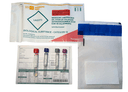
Blood collection at collection point
- After your order you receive instructions by email
- Make an appointment at a collection point near you
- Blood collection at 900+ locations across the Netherlands
- Receive your results digitally by email
Apolipoprotein B (ApoB)
ApoB; atherogenic lipoprotein particle number.
€23.95EUR
- TrustPilot 4.6/5 sterren
- No GP referral needed
- ISO 15189 certified analysis
- ISO 15189 Certified laboratory
- Results within 1 week
- Order today, processed today


What is Apolipoprotein B (ApoB)?
Apolipoprotein B is a primary protein component of Low-Density Lipoprotein (LDL), often referred to as the "bad" cholesterol, as well as of other lipoproteins such as VLDL (Very Low-Density Lipoprotein). ApoB plays an essential role in cholesterol metabolism by enabling cholesterol to be transported through the bloodstream and attach itself to the walls of the blood vessels, a process that can contribute to the development of atherosclerosis.
Why should you have Apolipoprotein B (ApoB) tested?
Measuring ApoB is particularly valuable for evaluating the risk of cardiovascular diseases. Because every LDL particle contains one ApoB protein, the concentration of ApoB directly indicates the amount of potentially atherogenic lipoprotein particles in the blood. This makes it a powerful marker for the risk of atherosclerosis and heart disease, possibly even more accurate than traditional cholesterol tests.
What does it indicate?
A high ApoB value indicates a large number of LDL particles in the bloodstream, which increases the risk of atherosclerosis. This is important because atherosclerosis can lead to heart disease, heart attacks, and strokes.
What does a high level of Apolipoprotein B (ApoB) mean?
A high level of ApoB in the blood indicates an increased risk of cardiovascular disease. It means that many LDL particles are present that can contribute to the buildup of plaque in the arterial walls.
What does a low level of Apolipoprotein B (ApoB) mean?
A low level of ApoB is favorable and indicates a lower risk of cardiovascular disease. It signifies that fewer LDL particles are in the bloodstream that could contribute to the formation of atherosclerotic plaque.