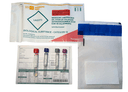
Blood collection at collection point
- After your order you receive instructions by email
- Make an appointment at a collection point near you
- Blood collection at 900+ locations across the Netherlands
- Receive your results digitally by email
Cardiolipin (IgM)
Cardiolipin-IgM; APLS/SLE diagnostics.
€40.95EUR
- TrustPilot 4.6/5 sterren
- No GP referral needed
- ISO 15189 certified analysis
- ISO 15189 Certified laboratory
- Results within 1 week
- Order today, processed today


What are Cardiolipin (IgM) antibodies?
Cardiolipin (IgM) antibodies are specific proteins produced by the immune system in response to cardiolipin, an important component of cell membranes. The presence of these antibodies may indicate autoimmune diseases, such as Systemic Lupus Erythematosus (SLE).
Why should you have Cardiolipin (IgM) antibodies tested?
Testing for Cardiolipin (IgM) antibodies is useful for people who show symptoms of autoimmune diseases, such as SLE, or for those who have an increased risk of these conditions. This test assists in diagnosing the disease and can be important for planning treatment.
What does it indicate?
The presence of Cardiolipin (IgM) antibodies indicates a possible autoimmune reaction, where the body attacks its own cells and structures. This may point to the presence of SLE or other autoimmune diseases.
What does a high Cardiolipin (IgM) antibody level mean?
A high level of Cardiolipin (IgM) antibodies may indicate an active autoimmune disease such as SLE. It can also be associated with a higher risk of blood clotting disorders, including antiphospholipid syndrome.
What does a low Cardiolipin (IgM) antibody level mean?
A low level of Cardiolipin (IgM) antibodies is generally normal and indicates that the specific autoimmune reactions associated with SLE or similar conditions are not present.