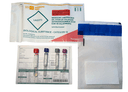
Blood collection at collection point
- After your order you receive instructions by email
- Make an appointment at a collection point near you
- Blood collection at 900+ locations across the Netherlands
- Receive your results digitally by email
Phosphate (Phosphorus)
Phosphate; bone and energy metabolism.
€4.50EUR
- TrustPilot 4.6/5 sterren
- No GP referral needed
- ISO 15189 certified analysis
- ISO 15189 Certified laboratory
- Results within 1 week
- Order today, processed today


What is Phosphate?
Phosphate, or Phosphorus, is an essential mineral found in every cell of the body. It plays a key role in the formation of bones and teeth, assists in energy production, and is involved in the creation of DNA and RNA.
Why should you have Phosphate tested?
Testing Phosphate levels can be important for individuals experiencing symptoms of excessively high or low Phosphate levels, such as weak bones or muscle problems. It is also useful for patients with kidney disease, as the kidneys play a crucial role in regulating Phosphate levels.
What does it indicate?
Phosphate levels in the blood can point to various health issues. High levels may indicate kidney disease or hyperparathyroidism (overactive parathyroid gland), while low levels may suggest malnutrition, a vitamin D deficiency, or hypoparathyroidism (underactive parathyroid gland).
What does a high Phosphate level mean?
A high Phosphate level may indicate kidney problems, as the kidneys are unable to effectively filter excess Phosphate from the blood. It can also be an indication of hyperparathyroidism, where the parathyroid glands produce too much hormone that affects Phosphate levels.
What does a low Phosphate level mean?
A low Phosphate level may suggest malnutrition or a vitamin D deficiency, which can lead to bone weakness and other health problems. It can also be a sign of hypoparathyroidism, where the parathyroid glands produce insufficient hormones needed for the regulation of Phosphate levels.
inorganic phosphate (PO4)