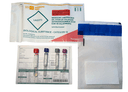
Blood collection at collection point
- After your order you receive instructions by email
- Make an appointment at a collection point near you
- Blood collection at 900+ locations across the Netherlands
- Receive your results digitally by email
Homocysteine
Assess your risk of cardiovascular diseases with our Homocysteine blood test; fast, reliable, and performed in a citrate-plasma tube.
€44.95EUR
Important collection instructions
Requires immediate analysis. This can only be performed at our laboratory in Mönchengladbach, Germany. We'll arrange the appointment for you and contact you after checkout. Not available at regular collection points.
- TrustPilot 4.6/5 sterren
- No GP referral needed
- ISO 15189 certified analysis
- ISO 15189 Certified laboratory
- Results within 1 week
- Order today, processed today


What is Homocysteine?
Homocysteine is an amino acid in the blood, resulting from the metabolism of methionine, an essential amino acid obtained through our diet. Normally, homocysteine is quickly converted into other substances used by the body. The amount of homocysteine in the blood is influenced by diet, genetic factors, and the function of certain vitamins (B6, B12, folic acid).
Why should you have Homocysteine tested?
A test for homocysteine can be useful for assessing the risk of cardiovascular diseases. High levels may indicate a deficiency in vitamins B6, B12, or folic acid, or a genetic predisposition that increases the risk of heart disease. It is particularly helpful for people with a personal or family history of heart disease, or those following a diet low in certain B vitamins.
What does it indicate?
The level of homocysteine in the blood can be indicative of various health issues, including heart disease, stroke, and peripheral vascular disease. It is also associated with bone weakness (osteoporosis) and macular degeneration.
What does a high Homocysteine level mean?
A high level of homocysteine in the blood may indicate an increased risk of cardiovascular disease. It may also suggest a deficiency in vitamins B6, B12, or folic acid, or a genetic predisposition that affects the breakdown of homocysteine.
What does a low Homocysteine level mean?
Low levels of homocysteine are generally not concerning and are rarely associated with health problems.
Homocysteine (HOCY) in citrate-plasma tube