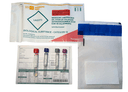
Blood collection at collection point
- After your order you receive instructions by email
- Make an appointment at a collection point near you
- Blood collection at 900+ locations across the Netherlands
- Receive your results digitally by email
LDH Isoenzymes (1–5)
LDH Isoenzymes (1–5); organ pattern.
€44.95EUR
- TrustPilot 4.6/5 sterren
- No GP referral needed
- ISO 15189 certified analysis
- ISO 15189 Certified laboratory
- Results within 1 week
- Order today, processed today


What is LDH Isoenzymes?
LDH, or lactate dehydrogenase, is an enzyme involved in the conversion of sugar to energy in the body's cells. There are different types of LDH, known as isoenzymes, which are found in specific parts of the body, such as the heart, liver, muscles, and kidneys.
Why should you have LDH Isoenzymes tested?
Testing LDH isoenzymes can be useful for monitoring the health of certain organs or identifying the cause of specific symptoms. For example, after a heart attack, the LDH level in the blood will change, which can assist in diagnosis. It can also indicate liver disease, muscle damage, or other conditions.
What does it indicate?
An LDH test provides insight into the presence and extent of tissue damage in the body. By measuring the specific isoenzymes, doctors can determine which part of the body is affected and, in some cases, assess the severity of the condition.
What does a high LDH level mean?
A high level of LDH in the blood can indicate tissue damage somewhere in the body. Depending on which LDH isoenzymes are elevated, this might suggest issues such as heart attacks, liver disease, kidney disease, or muscle damage.
What does a low LDH level mean?
A low level of LDH is generally not considered problematic and often has no clinical significance. However, in rare cases, it might indicate low activity in certain parts of the body, depending on which isoenzyme is low.