Anti-Müller Hormone (AMH) (fingerstick)
AMH; ovarian reserve/fertility.
- No GP referral needed
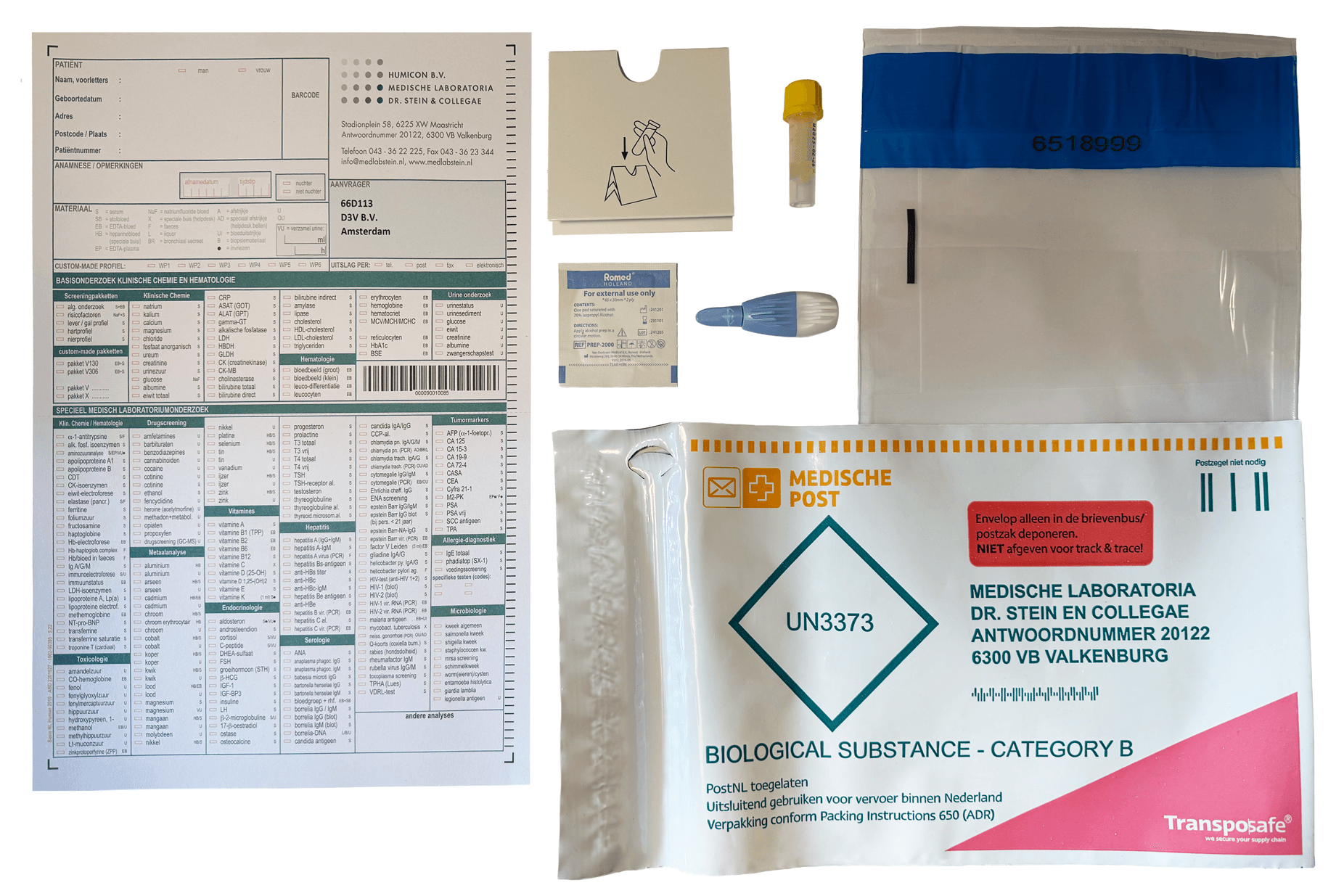
Fingerstick at home – no collection point needed
How it works
- 01
Receive your fingerstick kit
You receive a fingerstick kit with clear instructions
- 02
Prick & collect
Easily collect a few drops of blood yourself
- 03
Mail back
Return via medical mail to the lab
What is Anti-Müller Hormone (AMH)?
Anti-Müller Hormone (AMH) is a hormone produced by the reproductive organs and is an important indicator of fertility. In women, it indicates the size of the ovarian reserve, which can help in assessing fertility and planning family expansion. In men, AMH is produced in the testicles and plays a role in testicular development and sperm production.
Why should you have Anti-Müller Hormone tested?
Testing AMH levels can be useful for individuals who wish to assess their fertility or are experiencing difficulties conceiving. In women, it can assist in understanding conditions such as polycystic ovary syndrome (PCOS) or early menopause. In men, it can provide insight into sperm production and testicular function.
What does it indicate?
AMH levels provide an indication of ovarian reserve in women, which can help in predicting response to fertility treatments and assessing the time until menopause. In men, the AMH value may point to testicular health and sperm production capacity.
What does a high AMH level mean?
In women, a high AMH level indicates good ovarian reserve, suggesting potentially higher fertility. However, very high levels can also point to PCOS. In men, high levels may be normal, but should be assessed in context with other tests.
What does a low AMH level mean?
A low AMH level in women may indicate reduced ovarian reserve, which can suggest decreased fertility and impending menopause. In men, a low level may point to reduced sperm production or testicular dysfunction.