Creatinine (fingerstick)
Measure your kidney function at home with creatinine finger prick including eGFR and CKD-EPI calculation.
- No GP referral needed
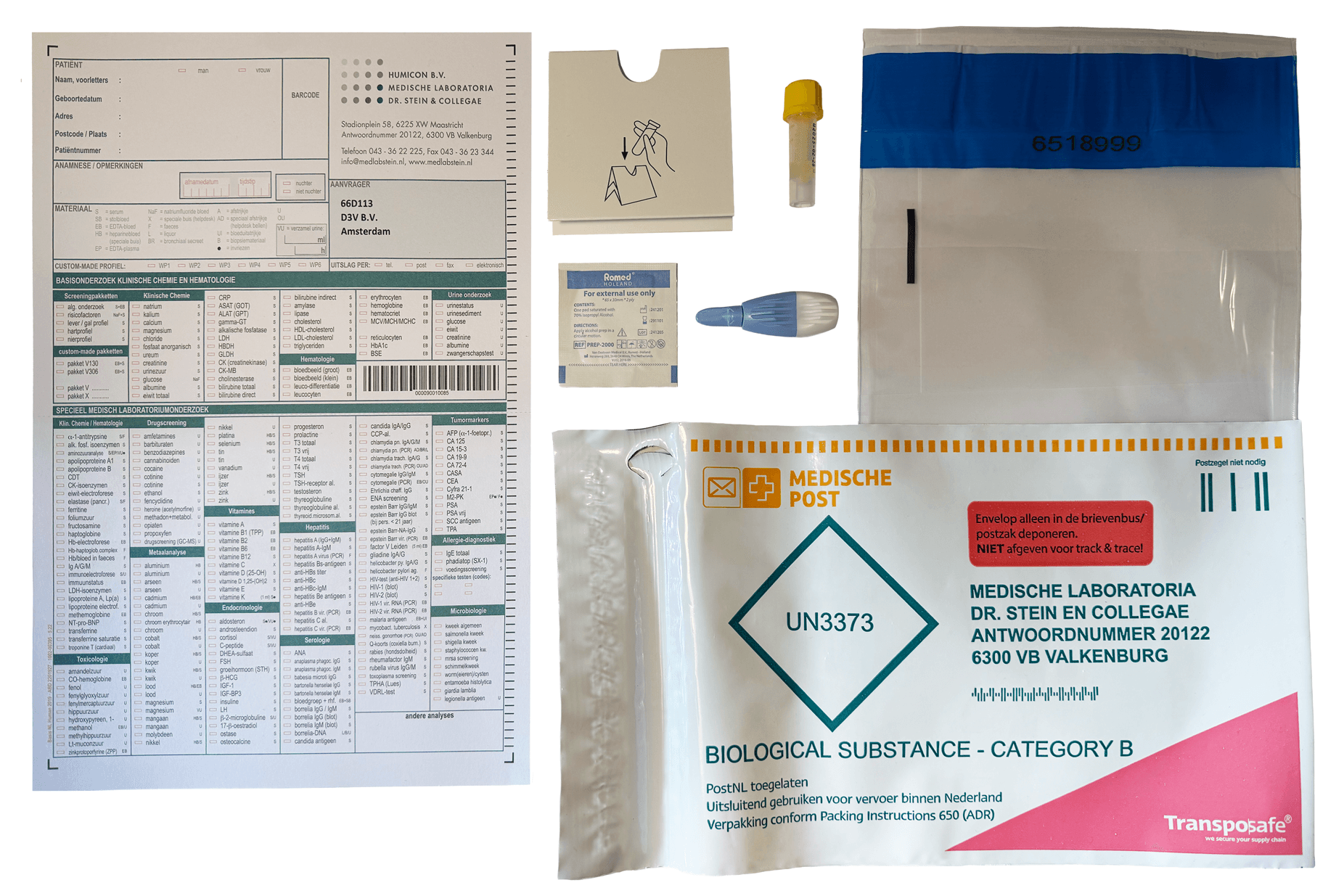
Fingerstick at home – no collection point needed
How it works
- 01
Receive your fingerstick kit
You receive a fingerstick kit with clear instructions
- 02
Prick & collect
Easily collect a few drops of blood yourself
- 03
Mail back
Return via medical mail to the lab
What is Creatinine?
Creatinine is a waste product that results from the normal breakdown of muscle tissue. It is transported through the bloodstream to the kidneys, where it is filtered and excreted through urine. Creatinine is an important biomarker for kidney function.
What is eGFR and CKD-EPI?
The eGFR (estimated Glomerular Filtration Rate) is a calculation that provides an estimate of how well your kidneys are functioning. It is calculated using the CKD-EPI formula (Chronic Kidney Disease Epidemiology Collaboration), the most accurate and current formula for estimating kidney function.
The CKD-EPI formula uses:
- Your creatinine value
- Age
- Gender
The eGFR indicates how much blood (in milliliters) your kidneys can filter per minute per 1.73m² body surface area. This provides a much more accurate picture of kidney function than creatinine alone.
Why would you test Creatinine and eGFR?
Testing creatinine and calculating eGFR is essential for assessing kidney function. This combination provides the most complete picture of how well your kidneys are working. The test is used for:
- Routine check-ups and preventive screening
- Suspected kidney disease
- Monitoring known kidney diseases
- Assessment of medication dosing (many medications are excreted through the kidneys)
- Evaluation of risk factors such as diabetes and high blood pressure
- Screening for family history of kidney disease
What does it indicate?
The eGFR is the primary indicator of kidney function and is classified into different stages:
- ≥90 mL/min/1.73m²: Normal to excellent kidney function (stage 1)
- 60-89 mL/min/1.73m²: Mildly decreased kidney function (stage 2)
- 45-59 mL/min/1.73m²: Moderately decreased kidney function (stage 3a)
- 30-44 mL/min/1.73m²: Moderately to severely decreased kidney function (stage 3b)
- 15-29 mL/min/1.73m²: Severely decreased kidney function (stage 4)
- <15 mL/min/1.73m²: Kidney failure, dialysis may be needed (stage 5)
What does elevated Creatinine / low eGFR mean?
Elevated creatinine and low eGFR indicate decreased kidney function. The kidneys are less able to effectively filter waste products from the blood. Possible causes include:
- Chronic kidney disease (most common)
- Acute kidney injury
- Dehydration (temporary)
- Diabetes or high blood pressure (damage kidneys over time)
- Nephrotoxic medications (NSAIDs, certain antibiotics)
- Kidney stones or urinary tract obstruction
- Very high muscle mass or intense training (can temporarily raise creatinine)
What does low Creatinine / high eGFR mean?
Low creatinine is less common and may indicate:
- Decreased muscle mass due to age, illness, or malnutrition
- Severe liver disease (reduced creatine production)
- Pregnancy (physiologically decreased)
A very high eGFR (>120 mL/min/1.73m²) is often normal in young, healthy people. It can also occur with hyperfiltration in early-stage diabetes, where the kidneys temporarily work harder.
Preparation
For the most reliable results, it is recommended to:
- Fast for 8-12 hours before the test
- Avoid heavy physical exercise 24 hours before the test
- Be well hydrated