Iron Profile (Iron, Ferritin, Transferrin Saturation) (fingerstick)
Combination of iron, ferritin, and transferrin saturation; iron status.
- No GP referral needed
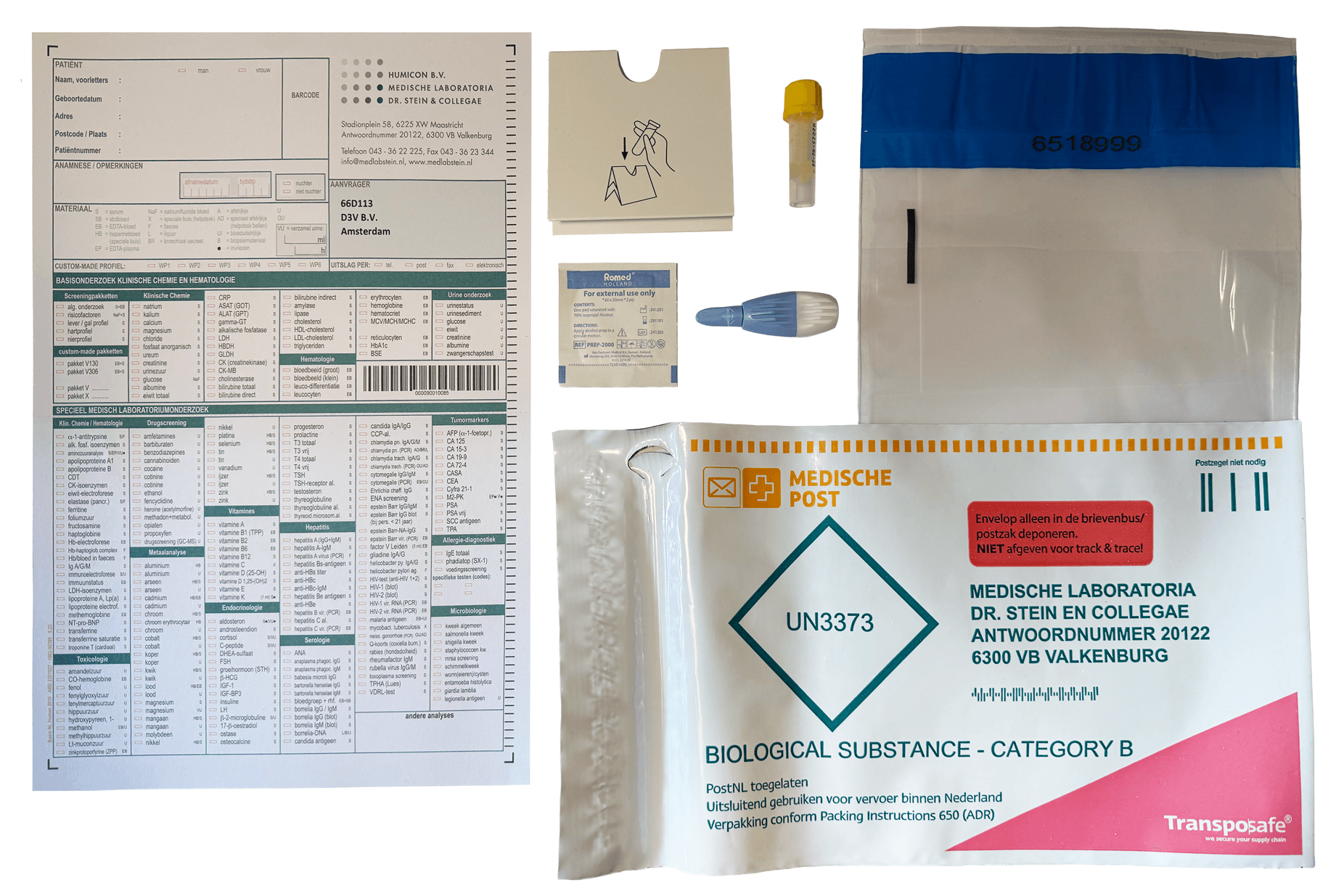
Fingerstick at home – no collection point needed
How it works
- 01
Receive your fingerstick kit
You receive a fingerstick kit with clear instructions
- 02
Prick & collect
Easily collect a few drops of blood yourself
- 03
Mail back
Return via medical mail to the lab
What is the Iron Profile?
The Iron Profile is a comprehensive blood test that measures three key biomarkers: serum iron, ferritin, and transferrin saturation. This test evaluates the amount of iron circulating in your blood, your body’s iron storage capacity, and how efficiently your blood transports iron. Together, these markers provide a complete picture of your iron metabolism.
- Serum Iron: Measures the amount of iron currently circulating in your blood.
- Ferritin: Reflects the iron stored in your body, indicating long-term iron reserves.
- Transferrin Saturation: Assesses how efficiently iron is transported in your blood (calculated from serum iron and transferrin values).
Why should you have the Iron Profile tested?
Testing your iron profile is useful for several reasons. It can help diagnose iron deficiency or iron overload, which may be caused by dietary issues, internal bleeding, or other health conditions. It is particularly important for people who feel fatigued, menstruating women, pregnant women, vegetarians, or vegans.
- Identify iron deficiency: Helps detect low iron levels that can lead to anemia.
- Detect iron overload: Can indicate conditions like hemochromatosis or liver disease.
- Monitor treatment: Tracks the effectiveness of iron supplementation or therapy.
- Support overall health: Ensures adequate iron for energy, immune function, and oxygen transport.
What do the results indicate?
The Iron Profile gives insight into your body’s iron status and helps determine the cause of abnormal iron levels. Patterns in the biomarkers can indicate deficiency, overload, or inflammation:
- Normal values: All three markers within the normal range indicate a healthy iron balance.
- Iron deficiency pattern: Low serum iron, low transferrin saturation (<20%), low ferritin (<15 μg/L).
- Iron overload pattern: High serum iron, high transferrin saturation (>45%), high ferritin.
- Inflammation or chronic disease: Normal/low serum iron, low transferrin saturation, normal/high ferritin.
What does a high iron level mean?
High iron levels may indicate hemochromatosis (excessive iron absorption from diet), liver disease, certain types of anemia, or recent iron supplementation. It suggests that monitoring or intervention may be necessary.
What does a low iron level mean?
Low iron levels usually indicate iron deficiency, which can lead to anemia. Causes may include poor diet, internal bleeding, or increased iron demand (such as during pregnancy).