Sex Hormone-Binding Globulin (SHBG) (fingerstick)
SHBG; binding of testosterone and estradiol.
- No GP referral needed
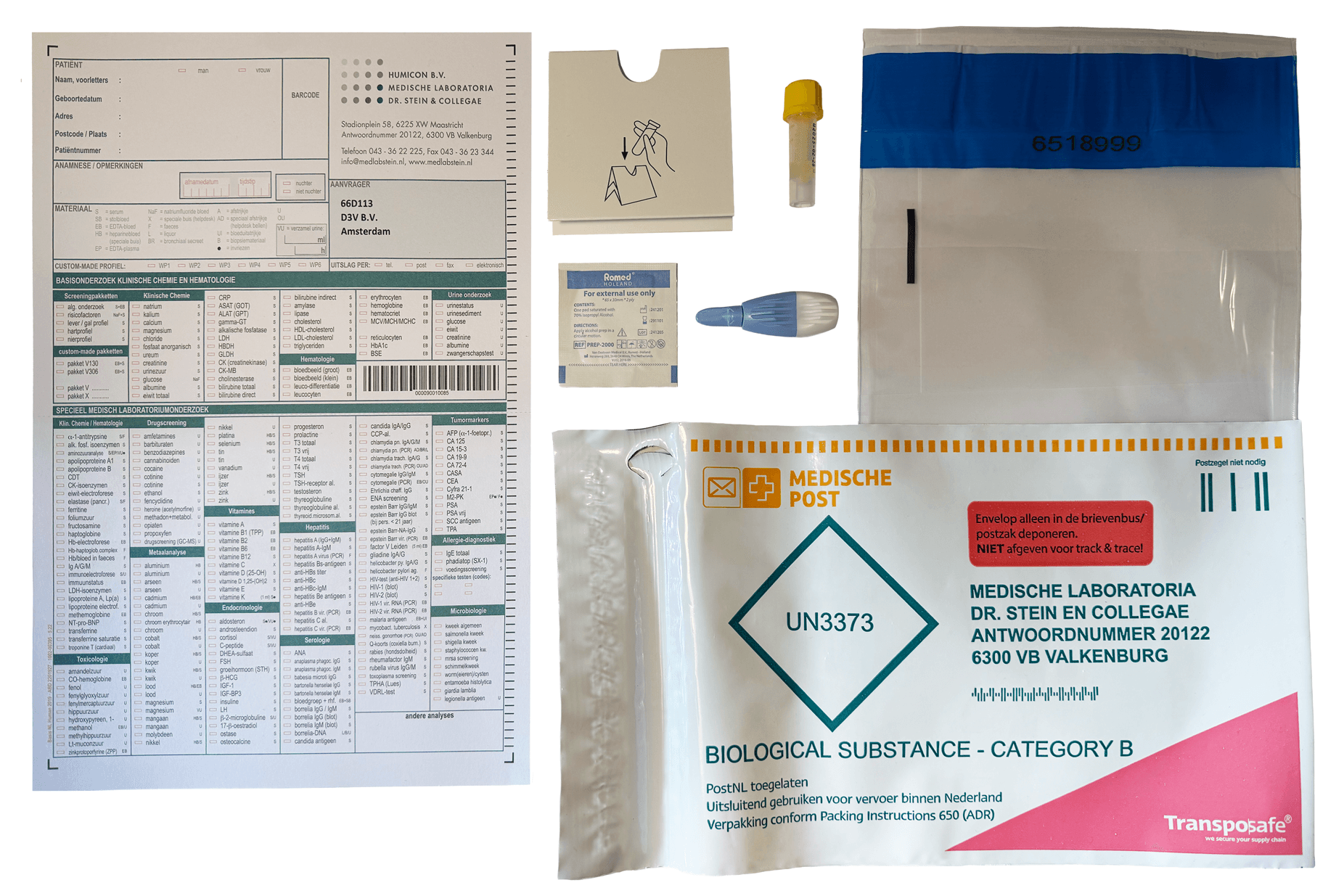
Fingerstick at home – no collection point needed
How it works
- 01
Receive your fingerstick kit
You receive a fingerstick kit with clear instructions
- 02
Prick & collect
Easily collect a few drops of blood yourself
- 03
Mail back
Return via medical mail to the lab
What is SHBG?
SHBG (Sex Hormone-Binding Globulin) is a protein produced in the blood that plays a crucial role in regulating the amount of sex hormones, including testosterone and estrogen, that are available to the body. It binds to these hormones, thereby affecting their activity.
Why should you have SHBG tested?
An SHBG test can be useful for assessing various hormonal imbalances. It is especially helpful when there are symptoms suggesting possible issues with sex hormones, such as unexplained fatigue, fertility problems, menstrual irregularities, or symptoms of testosterone levels that are too high or too low.
What does it indicate?
SHBG levels in the blood can provide insight into the amount of active sex hormones available to the body. This can assist in the diagnosis of conditions related to hormonal imbalance.
What does a high SHBG level mean?
A high level of SHBG may indicate a reduced amount of available active sex hormones. This can cause symptoms such as decreased libido, fatigue, and muscle weakness. It may also point to underlying conditions such as hyperthyroidism or liver diseases.
What does a low SHBG level mean?
A low level of SHBG suggests that more active sex hormones are available than normal, potentially leading to symptoms such as acne, excessive hair growth, and in some cases, an increased risk of developing hormone-sensitive conditions.