Testosterone (fingerstick)
Total testosterone via finger prick; androgenic status.
- No GP referral needed
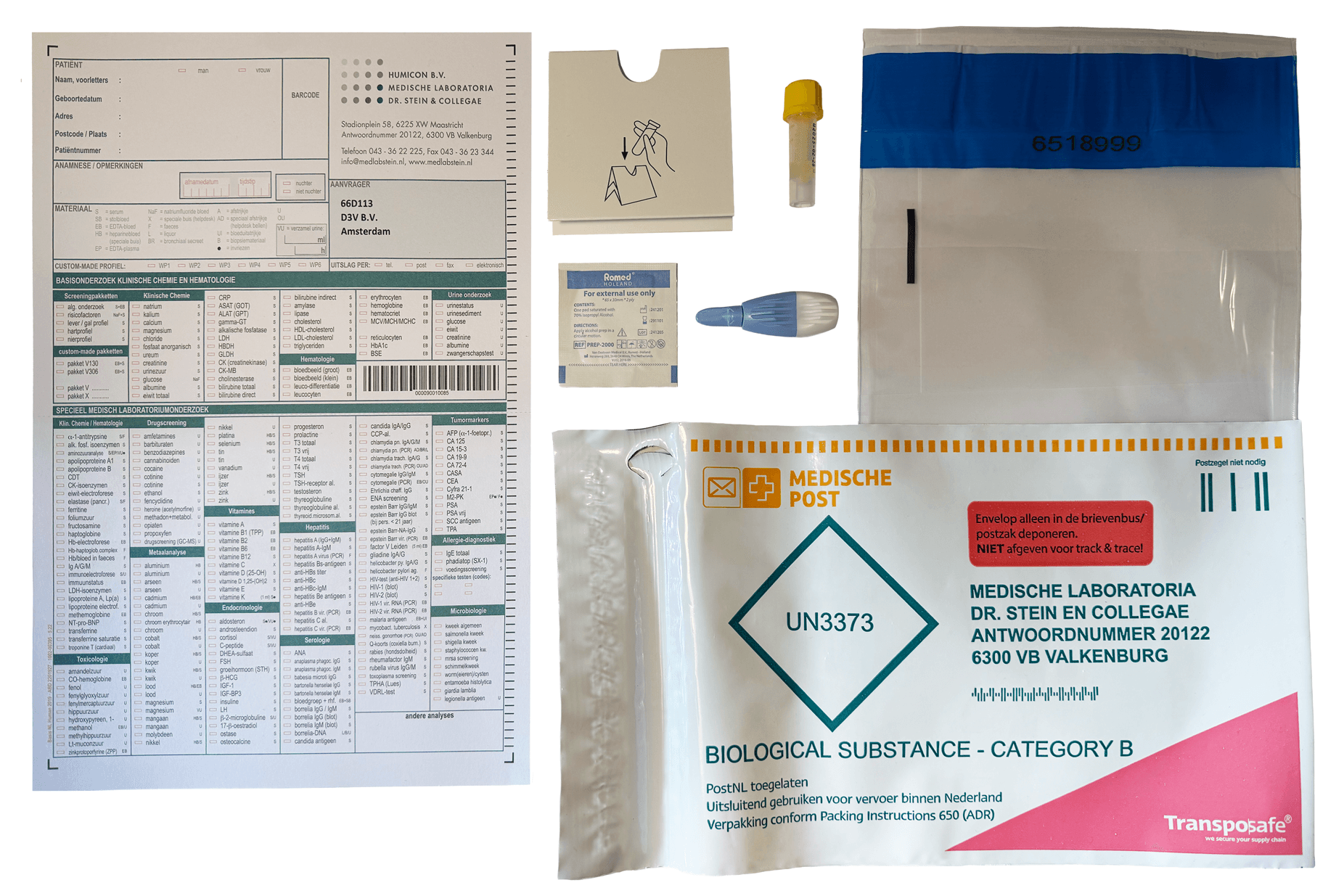
Fingerstick at home – no collection point needed
How it works
- 01
Receive your fingerstick kit
You receive a fingerstick kit with clear instructions
- 02
Prick & collect
Easily collect a few drops of blood yourself
- 03
Mail back
Return via medical mail to the lab
What is Testosterone?
Testosterone is a crucial hormone for both men and women, known for its role in the development of male characteristics, muscle mass, bone density, and sexual functions. It is primarily produced in the testicles in men and the ovaries in women, with small amounts originating from the adrenal glands.
Why should you test testosterone?
Testing testosterone is useful for various reasons, such as evaluating unexplained changes in body composition, libido, energy levels, and mood. It is also beneficial for individuals experiencing symptoms that might indicate hormonal imbalance, such as reduced muscle mass, changes in sexual function, or unusual fatigue.
What does it indicate?
The level of testosterone in your blood can provide insight into your hormonal health. It assists in the diagnosis of various conditions, such as hypogonadism in men and polycystic ovary syndrome (PCOS) in women. It can also help assess how well the testicles, ovaries, and adrenal glands are functioning.
What does a high testosterone level mean?
A high testosterone level in men can cause symptoms such as acne, aggressive behavior, and an increased risk of heart disease. In women, it may lead to masculine physical characteristics, such as a deeper voice or excessive body hair.
What does a low testosterone level mean?
A low testosterone level in men can lead to reduced muscle mass, osteoporosis, reduced libido, and depression. In women, a low level may be associated with reduced fertility, menstrual irregularities, and fatigue.