DHEA-S (fingerstick)
DHEA‑S; adrenal androgens.
- No GP referral needed
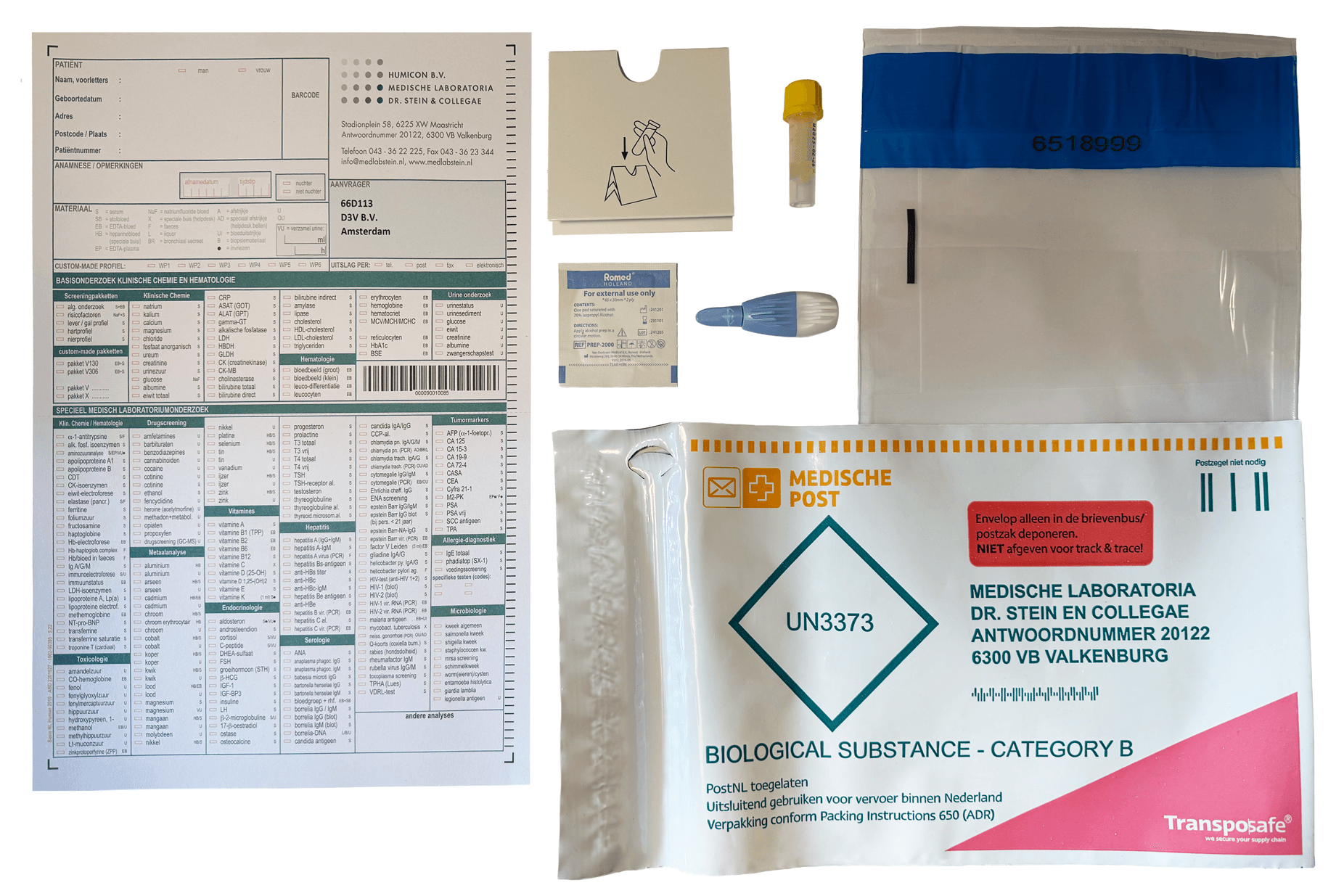
Fingerstick at home – no collection point needed
How it works
- 01
Receive your fingerstick kit
You receive a fingerstick kit with clear instructions
- 02
Prick & collect
Easily collect a few drops of blood yourself
- 03
Mail back
Return via medical mail to the lab
What is Dehydroepiandrosterone sulfate (DHEA-S)?
Dehydroepiandrosterone sulfate (DHEA-S) is a hormone primarily produced in the adrenal glands. It plays a vital role in the production of androgens and estrogens, the male and female sex hormones. DHEA-S is a sulfated derivative of DHEA and acts as a reservoir that can be converted into active hormones as needed.
Why should you test DHEA-S?
Testing DHEA-S can be useful for individuals experiencing symptoms that may indicate hormonal imbalances, such as fatigue, reduced libido, and changes in body composition. It may also be recommended for people who have an underlying condition affecting hormone production, such as adrenal insufficiency or polycystic ovary syndrome (PCOS).
What does it indicate?
DHEA-S levels can provide insight into overall hormonal health. Abnormal levels may indicate various health issues, including adrenal dysfunction and hormonal imbalances that may contribute to fertility problems.
What does a high DHEA-S level mean?
A high level of DHEA-S can indicate an overproduction of androgens, leading to symptoms such as acne, excessive hair growth in women (hirsutism), and other signs of masculinization.
What does a low DHEA-S level mean?
A low level of DHEA-S may point to reduced adrenal function, which can lead to symptoms such as fatigue, muscle weakness, and reduced immunity. It may also suggest more severe conditions like Addison's disease.