Fingerstick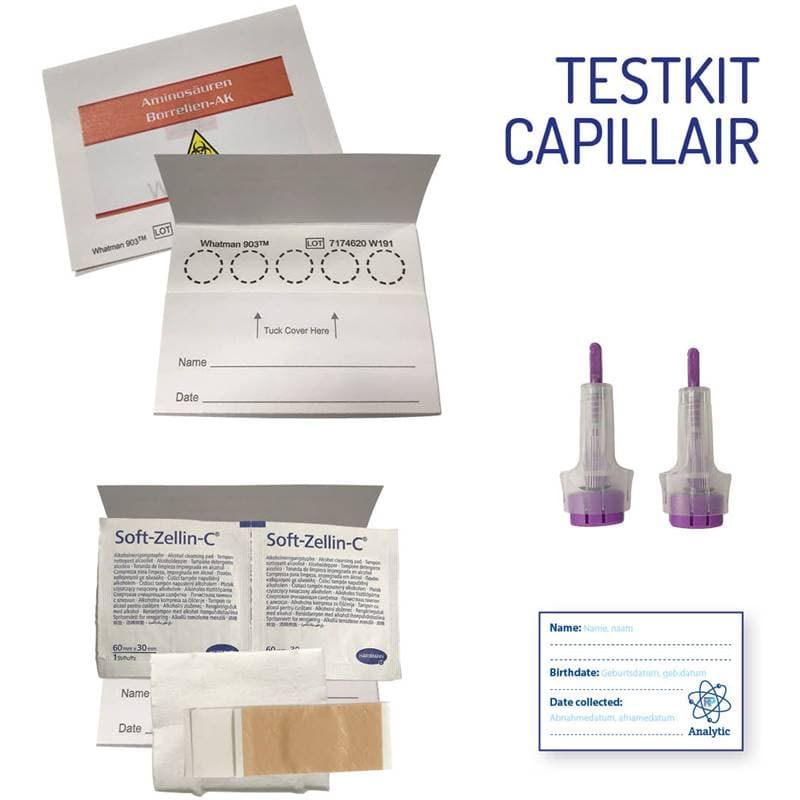
Amino Acids (Blood spot test)
Amino acids (Blood spot test)
€ 135,00
Capillary Blood Home Test
How it works
- 01
Receive your fingerstick kit
You receive a fingerstick kit with clear instructions
- 02
Prick & collect
Easily collect a few drops of blood yourself
- 03
Mail back
Return via medical mail to the lab
Leucine is an essential amino acid, meaning that it cannot be produced by the body and must be obtained through the diet. It is one of the nine essential amino acids required for protein synthesis and various other physiological processes in the body.
Leucine plays an important role in muscle protein synthesis, which is essential for muscle growth, repair, and maintenance. It is one of the branched-chain amino acids (BCAAs), along with isoleucine and valine, which are often used as supplements by athletes and individuals who are active in the gym.
Interpretation of test results
An elevated leucine value in the blood can have several causes. It can be associated with conditions such as leucinosis, a rare inherited disorder in which the body cannot properly break down leucine. Elevated leucine levels can also be observed in liver disease, kidney problems, or certain metabolic disorders.
A decreased leucine value can be seen in malnutrition, a diet insufficient in protein, or certain conditions that impair amino acid absorption or processing.
Isoleucine is an essential amino acid, meaning that it cannot be produced by the body and must be obtained through the diet. It is part of the branched-chain amino acid (BCAA) group, along with leucine and valine. Isoleucine plays various roles in the body, particularly in protein synthesis, energy production, and muscle growth.
Interpretation of test results
An elevated isoleucine value in the blood can be a sign of a condition called isovaleric acidemia (IVA). This is a rare inherited disorder in which the body cannot properly break down isoleucine. It can lead to the buildup of toxic substances in the body and can cause symptoms such as metabolic acidosis, vomiting, lethargy, and neurological problems.
A decreased isoleucine value can be associated with malnutrition or a diet insufficient in protein. It can also occur in certain conditions that affect the absorption or processing of amino acids, such as liver or kidney disease.
In some cases, a decreased isoleucine value may be observed in congenital metabolic disorders, such as maple syrup urine disease (MSUD). In this condition, the body cannot properly break down certain BCAAs, including isoleucine, which can lead to serious health problems.
Threonine is an essential amino acid, meaning that it cannot be produced by the body and must be obtained through the diet. It plays an important role in various physiological processes in the body.
Interpretation of test results
An elevated threonine value in the blood is rarely observed, and no specific clinical condition associated with it has been reported.
A decreased threonine value can occur with a diet insufficient in protein or in malnutrition. Threonine is essential for protein synthesis, and a deficiency can lead to reduced production of body proteins.
Some inherited metabolic disorders, such as threoninuria, can lead to a decreased level of threonine in the blood. Threoninuria is a rare condition in which the body cannot properly break down threonine, which can lead to elevated levels of threonine in the urine and low levels in the blood.
In liver disease, the synthesis and breakdown of amino acids can be disturbed, which can lead to a lower level of threonine in the blood.
Valine is an essential amino acid, meaning that it cannot be produced by the body and must be obtained through the diet. It belongs to the group of branched-chain amino acids (BCAAs), along with leucine and isoleucine. Valine plays various roles in the body, particularly in protein synthesis, energy production, and muscle growth.
Interpretation of test results
An elevated valine value in the blood can be a sign of a condition called maple syrup urine disease (MSUD). This is a rare inherited metabolic disorder in which the body cannot properly break down branched-chain amino acids, including valine. As a result, these amino acids accumulate in the blood and urine, which can lead to serious health problems.
A decreased valine value can occur in malnutrition or a diet insufficient in protein. It can also occur in certain conditions that affect the absorption or processing of amino acids, such as liver or kidney disease.
Decreased valine levels can also occur in some inherited metabolic disorders that affect the body's ability to break down valine.Lysine
Methionine is an essential amino acid, meaning that it cannot be produced by the body and must be obtained through the diet. It plays an important role in various physiological processes.
Interpretation of test results
An elevated methionine value in the blood can be observed in certain conditions, such as homocystinuria. Homocystinuria is an inherited metabolic disorder in which the body cannot properly break down methionine. It can lead to an accumulation of methionine and the formation of harmful substances in the body, which can lead to various health problems, such as eye and skeletal abnormalities, cardiovascular problems, and neurological symptoms.
A decreased methionine value can occur in a diet insufficient in methionine, in malnutrition, or in certain conditions that affect the absorption or processing of amino acids.
Decreased methionine levels can also occur in some inherited metabolic disorders that affect the body's ability to synthesize or use methionine.
Phenylalanine is an essential amino acid, meaning that it cannot be produced by the body and must be obtained through the diet. It plays an important role in the synthesis of proteins and the production of other molecules in the body.
Interpretation of test results
An elevated phenylalanine value in the blood can be a sign of phenylketonuria (PKU), an inherited disorder in which the body cannot properly break down phenylalanine. This is due to a deficiency of the enzyme phenylalanine hydroxylase. Untreated PKU can lead to the buildup of phenylalanine and the formation of harmful substances in the body, which can cause neurological problems and mental retardation.
A decreased phenylalanine value is usually not clinically significant and is rarely considered a problem. However, it can occur in conditions where there is reduced protein intake or absorption, such as malnutrition or certain gastrointestinal conditions.
Tryptophan is an essential amino acid that cannot be produced by the body and must be obtained through the diet. It plays various roles in the body and is a precursor to the neurotransmitter serotonin and the hormone melatonin.
Interpretation of test results
An elevated tryptophan value in the blood is rarely considered a problem. In some cases, it may be elevated with excessive intake of tryptophan supplements. High levels of tryptophan can theoretically lead to increased serotonin production, which can lead to a condition called serotonin syndrome. Serotonin syndrome can cause symptoms such as increased heart rate, high blood pressure, confusion, and muscle stiffness.
A decreased tryptophan value can occur in a diet insufficient in tryptophan or in malnutrition. Low tryptophan levels can affect the production of serotonin and melatonin, which can lead to symptoms such as sleep disturbances, mood problems, and changes in appetite.
Histidine is a semi-essential amino acid, meaning that it can be produced by the body under normal circumstances, but in certain situations, it can become an essential nutrient. It plays various roles in the body and is important for growth and development, the production of red and white blood cells, the formation of histamine, and the function of the nervous system and muscles.
Interpretation of test results
An elevated histidine value in the blood is rarely observed, and no specific clinical condition associated with it has been reported.
A decreased histidine value can occur in certain inherited disorders that affect amino acid metabolism, such as histidinuria. Histidinuria is a rare condition in which the body cannot properly process histidine, which can lead to an accumulation of histidine in the blood and problems with the kidneys and nervous system.
Glycine is a non-essential amino acid, meaning that it can be produced by the body and can also be obtained through the diet. It plays various roles in the body and is involved in the synthesis of proteins, the formation of collagen, the production of important molecules such as DNA and glutathione, and the function of the central nervous system.
Interpretation of test results
An elevated glycine value in the blood is rarely observed, and no specific clinical condition associated with it has been reported.
A decreased glycine value can occur in certain genetic disorders, such as glycine encephalopathy. Glycine encephalopathy is a rare inherited disorder in which the body cannot properly break down glycine, which can lead to problems with the nervous system, intellectual disability, and other health problems.
Alanine is a non-essential amino acid, meaning that it can be produced by the body and can also be obtained through the diet. It plays various roles in the body, including protein synthesis, blood sugar regulation, and providing energy to muscles and the central nervous system.
Interpretation of test results
An elevated alanine value in the blood can occur in liver diseases, as the liver is involved in the breakdown and metabolism of alanine. In conditions such as liver cirrhosis or hepatitis, liver function can be impaired, which can cause alanine levels in the blood to rise. In addition, an elevated alanine value can be observed in certain metabolic disorders, such as conditions involving a disturbance in alanine metabolism.
A decreased alanine value is rarely considered a problem, as it is usually produced in sufficient quantities by the body and obtained through the diet.
In some cases, low alanine levels can occur in conditions that cause a disturbance in amino acid metabolism.
Serine is a non-essential amino acid, meaning that it can be produced by the body and can also be obtained through the diet. It plays various roles in the body, including protein synthesis, the production of cell membranes, the formation of neurotransmitters, and the metabolism of folic acid.
Interpretation of test results
An elevated serine value in the blood is rarely observed, and no specific clinical condition associated with it has been reported.
A decreased serine value can occur in certain inherited disorders, such as serine deficiency syndrome. Serine deficiency syndrome is a rare genetic disorder in which the body cannot produce enough serine, which can lead to various health problems, including neurological symptoms, intellectual disability, and developmental delay.
Arginine is a semi-essential amino acid, meaning that it can become essential in certain situations and must be obtained through the diet. It plays various roles in the body and is involved in protein synthesis, the production of nitric oxide (an important signaling molecule), wound healing, and the immune system.
Interpretation of test results
An elevated arginine value in the blood can occur in certain conditions, such as an infection or inflammation. During these situations, the body may increase arginine production in response to the immune system and the healing process.
Certain rare inherited disorders, such as argininosuccinate lyase deficiency, can lead to an accumulation of arginine in the blood.
A decreased arginine value in the blood is rarely a problem, as the body can usually produce or obtain enough arginine through the diet.
In certain diseases, such as liver disease or kidney failure, arginine levels may decrease due to reduced metabolism or synthesis.
Tyrosine is a non-essential amino acid, meaning that it can be produced by the body and can also be obtained through the diet. It plays various roles in the body and is involved in the synthesis of important molecules such as neurotransmitters (including dopamine, norepinephrine, and epinephrine), thyroid hormones, and melanin.
Interpretation of test results
An elevated tyrosine value in the blood is rarely observed, and no specific clinical condition associated with it has been reported.
A decreased tyrosine value can occur in certain inherited disorders, such as phenylketonuria (PKU). PKU is a genetic disorder in which the body cannot properly convert the amino acid phenylalanine, which can lead to a deficiency of tyrosine. A low tyrosine level can affect the synthesis of neurotransmitters and other important molecules, which can cause neurological and mental problems.
Decreased tyrosine values can also occur in malnutrition or a diet insufficient in tyrosine.
Proline is a non-essential amino acid, meaning that it can be produced by the body and can also be obtained through the diet. It plays various roles in the body and is involved in protein synthesis, the structure of collagen (an important component of connective tissue), and the function of the immune system.
Interpretation of test results
An elevated proline value in the blood is rarely observed, and no specific clinical condition associated with it has been reported.
A decreased proline value can occur in certain genetic disorders, such as pyrroline-5-carboxylate deficiency. This condition is very rare and can lead to reduced proline synthesis, which can cause various health problems, including joint problems, skin abnormalities, and developmental delay.
Decreased proline values can also occur in malnutrition or a diet insufficient in proline.
Glutamic acid, also known
Preparation and sampling
Fasting: no food for 12 hours before collection
- Do the finger prick in the morning before breakfast: do not eat for 12 hours before and drink only water. After a meal with protein, amino acids are temporarily higher.Applies to: Leucine, Isoleucine, Threonine, Valine, Lysine, Methionine, Fenylalanine, Tryptofaan, Histidine, Glycine, Alanine, Serine, and Arginine
Risks and downsides of this test
- Finger prick at home. For about nine in ten people the sample succeeds on the first try. Too little blood or haemolysis (damaged blood cells from squeezing hard) makes the sample unusable and a new kit is needed.
- No test is one hundred percent reliable. A result can point to something that is not there, or miss something that is. A result is a snapshot and does not make a diagnosis.
- An abnormal result has consequences. It can lead to follow-up tests with your GP, and to worry that turns out to be unnecessary. Follow-up tests or treatment can have downsides of their own.
- Incidental findings are not expected with this test. An incidental finding is something other than what you were looking for. During checkout you choose whether you want to be informed about one.
Vitamins, minerals and amino acids13
Always discuss an abnormal result with your GP. If a result is strongly abnormal, we try to reach you as soon as possible. Read your result yourself as well and contact your GP if in doubt. A test does not make a diagnosis. Read more about risks and results
Independent information sources
We recommend consulting these independent sources before ordering a preventive health check.
Practical information
Frequently asked questions
How does the fingerstick test work from A to Z?
After ordering we ship the collection kit to your home. You prick your fingertip, collect a few drops of blood, return it in the envelope, and receive your result digitally by email.
How do I collect my blood sample?
A small prick on your fingertip lets you collect a few drops into a tube. The instructions include step-by-step photos and video, so no guessing required.
When and how do I receive my result?
Usually 2 to 5 working days after the lab receives your sample. You receive your laboratory report securely by email. It lists the measured values, units, reference ranges and any flags added by the laboratory.
What if the collection doesn't work?
Some people find the fingerstick tricky at first. Warm your hands, hang your arm down, and prick the side of the fingertip for better blood flow. If it still doesn't work, get in touch.
How do I return the collection materials to the lab?
Use the supplied return envelope and place it in the letter-mail bag inside a PostNL service point yourself as soon as possible. Do not hand it to counter staff or request track & trace. The instructions supplied with your test state when it must be sent.
What if I have questions or something doesn't work?
Feel free to contact us via WhatsApp, email or phone. We're happy to help you before, during or after your test. If the collection doesn't work, we'll arrange a solution or send new materials — no hassle.
Not sure which test is right for you? We’re happy to help.
WhatsApp+31 (0)412 23 69 61E-mailinfo@bloedcheckup.nlShippingDiscreet mailbox delivery
Didn't find what you're looking for?Request a custom testWeekdays 09:00 – 17:00
“Very positive experience”
From ordering to having my blood drawn, everything went smoothly and was well organised. I really appreciated being able to visit a blood collection location in my own town so quickly. I received clear instructions beforehand, and the results arrived promptly by email too. Very satisfied!
ElineVerified
“Good communication”
This company responds to questions thoroughly and promptly. The entire process, from requesting the test to having blood drawn and receiving the results, runs very smoothly. Overall, I am very satisfied!
Jacques QuipèreVerified
“Wide choice of tests, fast and affordable”
You can choose the tests yourself. Fast delivery and processing, clear instructions and affordable.
SMVerified
“I am satisfied with the service”
I received a referral by email, just like from a GP. I did not have to send anything by post and could quickly visit a local blood collection centre. The results were fast and clear. The price was good, not too expensive, and all messages were secure.
kraljicaVerified
“A very good experience”
A very good experience! I received quick answers to my questions, a custom blood test was put together, everything was arranged smoothly, and I could have my blood drawn by a healthcare professional nearby. The results were available within a few days. In short, very satisfied!
PhilVerified
“Very good customer service”
The customer service is very good. I had a complex request, which caused an issue at the blood collection centre. Customer service resolved it very well. They also offer a wide range of tests at a reasonable price.
Marc EekhoutVerified
“Everything was well organised”
Everything was well organised. The products were delivered within a few days and, after sending in the samples, the results arrived within a few days too. Communication and information throughout the process were clear and friendly.
martijnVerified
“Fantastic service”
Fantastic service! Very good customer service that responds quickly and thinks along with you. Good prices. I will definitely use BloedCheckup's services again.
kambalesVerified
“Very happy to have found this business”
Very happy to have found this business. We need to check our blood more often :) The process was easy. They sent me the kit at home, then I had to go to a clinic with the papers and they knew what they had to do. I got the results in less than a week.
DenisaVerified
“Smooth process and good support”
Amazing website experience. I ordered various tests for 2 people. We went to one of the supported centers and took samples. Also after the results were ready, I needed a letter from the laboratory and they prepared the letter for me in no time. Definitely recommended.
Majid HajiheidariVerified
“Amazing service!”
Received a packet with everything needed, went to a walk in clinic (Amsterdam DC Clinic) where my blood was drawn and I was out the door within 5 minutes, and then after posting the samples, received results 2 days later. Results were easy to understand as well. Amazing service, would highly recommend!
Trudi CoetzeeVerified
“Great customer service”
I ordered a test through bloedcheckup.nl but later realized I no longer needed it. I contacted their support team, and they were very quick, responsive, and helpful in handling my cancellation. The whole process was smooth and efficient. Great customer service!
Elif Göksu BecerikVerified