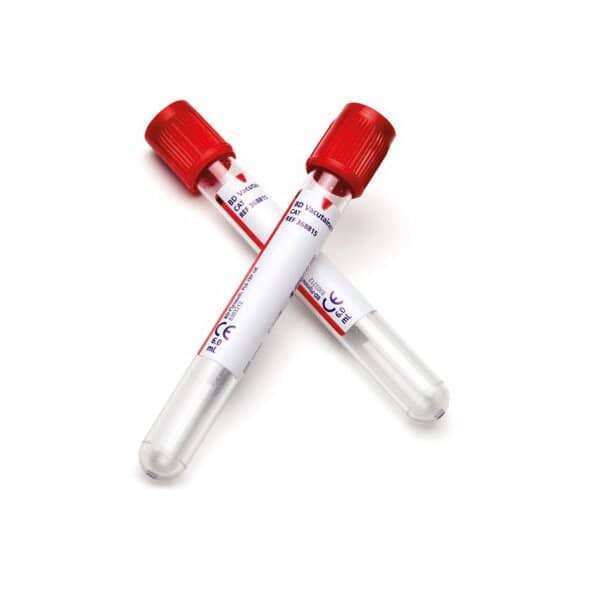
Blood draw
Ostase (bone-specific alkaline phosphatase)
Measures the alkaline phosphatase from bone. Shows whether a raised alkaline phosphatase comes from bone or liver, or helps follow a bone disease.
€ 51,00
Your privacy
Necessary cookies keep the website working.
With your consent, we use additional cookies to:
We may share visited pages, interactions and device data with 5 service providers.
Hashed contact details are shared only with marketing consent.
You can change this later through Cookie preferences at the bottom of every page.
More information is available in our privacy policy.
Muscles and bones · Blood
The part of alkaline phosphatase that comes from bone; a measure of the rate of bone formation, not a test for osteoporosis.
At a glance
Bone-specific alkaline phosphatase (Ostase)
Explanation
Alkaline phosphatase is an enzyme found mainly in the liver (the bile ducts) and in the bone-forming cells. Bone-specific alkaline phosphatase (Ostase) is the form that comes from bone. A high value shows that a lot of bone is being formed. Because only the bone form is measured, the test also helps to show whether a raised total alkaline phosphatase comes from bone or from the liver. The result says something about the rate of bone formation, not about how much bone there is.
Result
A high value fits a high rate of bone formation. This is normal in children and young people who are still growing and in the months after a broken bone. A high value is also seen with a vitamin D deficiency that softens the bone (osteomalacia), with Paget's disease (locally disordered bone remodeling), with an overactive parathyroid gland and with bone changes due to reduced kidney function. In the years after menopause the value is often slightly higher. A high value does not mean that you have osteoporosis.
A low value fits a low rate of bone formation. This is seen during treatment that slows bone breakdown and with long-term use of corticosteroids. A low value does not mean that your bones are strong or weak: the amount of bone is measured with a bone density scan (DXA). Rarely: an inherited shortage of alkaline phosphatase (hypophosphatasia), in which total alkaline phosphatase is also low.
With a raised value, the GP looks at calcium, phosphate, vitamin D, kidney function and the parathyroid gland, and if needed requests an X-ray or bone scan for symptoms in one place. With a question about osteoporosis, a risk assessment follows and, if needed, a bone density scan.
Reliability
In an individual, a single value says little about the amount of bone or the risk of a broken bone. Osteoporosis is diagnosed with a bone density scan; when looking for a cause, the guideline on osteoporosis and fracture prevention lists ordinary alkaline phosphatase, not the bone-specific form. The test is useful for telling bone from liver with a raised total alkaline phosphatase, and for following a bone disease. The test method also reacts to a small extent to the liver form, so a strongly raised liver form can raise the result slightly.
Who it is for
Useful with a raised total alkaline phosphatase where it is unclear whether it comes from bone or the liver, with a known bone disease such as Paget's disease, or when following treatment for osteoporosis. It is not a test for osteoporosis: in people without symptoms the result adds nothing to estimating the risk of a broken bone.
Osteoporosis is common, especially in women after menopause and in older people. Osteoporosis is diagnosed with a bone density scan, not with bone markers in blood. Paget's disease occurs mainly in older people and often causes no symptoms.
Dutch medical specialists' guideline (FMS) on osteoporosis and fracture prevention and Thuisarts.nl
Get tested
Bone-specific alkaline phosphatase (Ostase) is part of these test panels. You order online and have your blood drawn at a collection point or collect the sample at home.
Evidence
This explanation is based on Dutch guidelines and independent information. It is general information, not a diagnosis. Discuss an abnormal result with your GP.
More about risks and resultsMore explanations