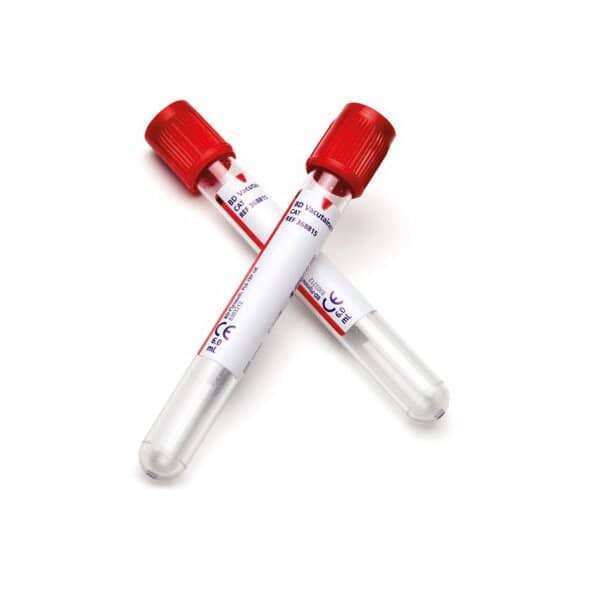
Blood draw
Haptoglobin
Measures haptoglobin, a protein that clears released hemoglobin. For tests for anemia caused by breakdown of red blood cells.
€ 32,00
Your privacy
Necessary cookies keep the website working.
With your consent, we use additional cookies to:
We may share visited pages, interactions and device data with 5 service providers.
Hashed contact details are shared only with marketing consent.
You can change this later through Cookie preferences at the bottom of every page.
More information is available in our privacy policy.
Blood count and blood group · Blood
A protein that clears released hemoglobin; a low value may fit faster breakdown of red blood cells.
At a glance
Explanation
Haptoglobin is a protein made by the liver. When red blood cells break down in the bloodstream, hemoglobin (the red pigment) is released. Haptoglobin binds this hemoglobin and carries it to the liver, where both are broken down. If many red blood cells break down (hemolysis), haptoglobin is used up and the value falls. Haptoglobin is also an acute phase protein: during inflammation the liver makes more of it.
Result
A raised value is usually due to inflammation or infection, because haptoglobin then rises like other acute phase proteins. Corticosteroids (such as prednisone) can also raise the value. A raised value on its own is not considered meaningful. However, inflammation can mask a fall caused by hemolysis, so that the value then looks normal.
A low value means haptoglobin is being used up faster than it is made. This fits faster breakdown of red blood cells, for example due to an inherited abnormality of the red blood cells, an artificial heart valve, immune reactions against your own red blood cells or certain medicines. A low value can also be due to reduced production in severe liver disease, or after major blood loss. Hemolysis often goes with symptoms of anemia, such as tiredness and shortness of breath, sometimes with yellow skin or dark urine. Some people naturally have a low value without anything being wrong.
With a low value, the GP looks at hemoglobin, reticulocytes, LDH and bilirubin to see whether there really is hemolysis. If the picture fits hemolysis, referral to an internist (specialist in internal medicine) usually follows to look for the cause.
Reliability
Haptoglobin is sensitive to breakdown of red blood cells in the bloodstream, but says nothing about the cause. The value is therefore assessed together with hemoglobin, reticulocytes (young red blood cells), LDH and bilirubin. A normal value does not fully rule out hemolysis, because inflammation can raise the value at the same time. According to the Dutch Society for Clinical Chemistry (NVKC), the test is not often requested, because the cause of anemia is usually found with other tests.
Who it is for
Useful with anemia where breakdown of red blood cells may be the cause, for example with a raised reticulocyte count or a raised LDH or bilirubin. Also useful with a known inherited abnormality of the red blood cells or an artificial heart valve. In people without anemia and without symptoms, a single value says little.
Anemia is common, especially in women and older people. Anemia caused by faster breakdown of red blood cells is a small part of this; the cause is usually a shortage of iron, vitamin B12 or folic acid, or a chronic disease.
Dutch GP guideline (NHG) on anemia and Thuisarts.nl
Get tested
Haptoglobin is part of these test panels. You order online and have your blood drawn at a collection point or collect the sample at home.
Evidence
This explanation is based on Dutch guidelines and independent information. It is general information, not a diagnosis. Discuss an abnormal result with your GP.
More about risks and resultsMore explanations