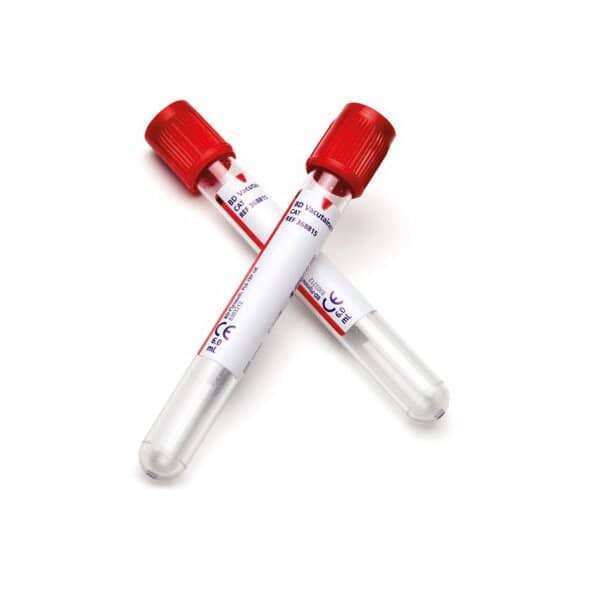
Blood draw
Bee venom allergy (IgE bee venom)
Measures IgE antibodies against bee venom. Only useful after an allergic reaction in the whole body to a bee sting.
€ 36,00
Your privacy
Necessary cookies keep the website working.
With your consent, we use additional cookies to:
We may share visited pages, interactions and device data with 5 service providers.
Hashed contact details are shared only with marketing consent.
You can change this later through Cookie preferences at the bottom of every page.
More information is available in our privacy policy.
Allergy and intolerance · Blood
Antibodies against bee venom; useful after a generalized allergic reaction to a bee sting, not as a test without such a reaction.
At a glance
Explanation
When a honeybee stings, it injects venom into the skin; the stinger usually stays behind in the skin. In most people this only causes pain, redness and swelling around the sting. After a previous sting, the body can make IgE antibodies against proteins in the venom; this is called sensitization. With an allergy, a next sting can then cause a reaction in the whole body. This test measures the amount of IgE antibodies against bee venom in the blood, in kU/l.
Result
A value above the cut-off means that you have IgE antibodies against bee venom: sensitization. That is not the same as an allergy. If you have had a reaction in the whole body after a bee sting, such as itching or hives all over the skin, swollen lips or tongue, shortness of breath, dizziness or fainting, a positive result fits an allergy to bee venom. Without such a reaction, a positive result is common and says little: in an Austrian study, 23 to 67 percent of people who had never had a reaction to a sting still had antibodies against bee or wasp venom, more often the higher the total IgE was. The level of the value does not predict how severe a next reaction will be.
A value below the cut-off means that no IgE antibodies against bee venom were found. An allergy to bee venom is then less likely, but after a clear generalized reaction it is not ruled out: in the first weeks after a sting the value may not yet be measurable, and in some people with a real allergy the blood test finds no antibodies. The allergist can then repeat the test or investigate further, for example with a skin test. A negative result does not change what you do in case of a new severe reaction.
With a severe reaction after a sting, such as shortness of breath, a swollen tongue or throat, dizziness or fainting, call 112 immediately; a result of this test does not change that. After a generalized reaction, the GP usually refers you to an allergist, and the GP and allergist decide together with you, based on the reaction and the results, about an adrenaline auto-injector for emergencies and about venom immunotherapy. According to the European guideline, this immunotherapy is the only treatment that prevents new generalized reactions to a sting.
Reliability
A positive IgE result shows sensitization, not allergy. With insect venom this matters even more: antibodies without a previous reaction are common and poorly predict whether you will react to a next sting. The European Academy of Allergy and Clinical Immunology (EAACI) therefore only recommends testing after a generalized (systemic) reaction to a sting, not after only a large swelling around the sting and not in people who have never had a reaction. After such a reaction, the result together with the history of the reaction and, if needed, a skin test forms the basis for the decision about treatment.
Who it is for
Useful after a generalized (systemic) allergic reaction to a bee sting: symptoms in places other than the sting, such as itching or hives all over the body, swollen lips or tongue, shortness of breath, dizziness or fainting. Not useful after only pain, redness or a large swelling around the sting, and not if you have never had a reaction: a positive result then says little. If you are not sure whether it was a bee or a wasp, both venoms are usually tested; a stinger left behind in the skin points to a bee.
According to the European guideline, up to 7.5 percent of adults and up to 3.4 percent of children ever have a generalized allergic reaction to an insect sting; in northern and central Europe this mainly concerns wasps and honeybees. Beekeepers and their family members are stung more often and more often have a bee venom allergy. Antibodies against insect venom without symptoms are much more common than an allergy.
EAACI guideline (Sturm et al., 2018) and Biló et al. (2005); no Dutch prevalence figure has been checked
Get tested
IgE antibodies to bee venom is part of these test panels. You order online and have your blood drawn at a collection point or collect the sample at home.
Evidence
This explanation is based on Dutch guidelines and independent information. It is general information, not a diagnosis. Discuss an abnormal result with your GP.
More about risks and resultsMore explanations