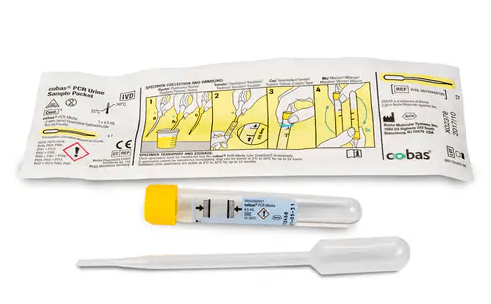
Urine · 3 analyses
Protein/creatinine ratio
Measures total protein and creatinine in urine and calculates the protein/creatinine ratio. To follow up protein in the urine or monitor protein loss.
€ 23,00
Your privacy
Necessary cookies keep the website working.
With your consent, we use additional cookies to:
We may share visited pages, interactions and device data with 5 service providers.
Hashed contact details are shared only with marketing consent.
You can change this later through Cookie preferences at the bottom of every page.
More information is available in our privacy policy.
Kidneys and electrolytes · Urine
The amount of protein in a urine sample, as a number; a measure of protein loss through the kidneys.
At a glance
Total protein (urine)
Explanation
Healthy kidneys retain the proteins in the blood; only very little ends up in the urine. This analysis measures the concentration of all proteins together in a urine sample, so albumin and also other proteins that a urine dipstick detects poorly. This makes the measurement suitable for following up a positive urine dipstick and for monitoring protein loss. The concentration also depends on how much you have drunk; that is why total protein is usually divided by the creatinine in the same urine (the protein/creatinine ratio).
Result
A raised concentration may point to protein loss through damaged kidney filters, usually due to diabetes or high blood pressure, sometimes due to a kidney disease such as inflammation of the kidney filters. Often a rise is temporary: after heavy exercise, with fever, dehydration or a urinary tract infection, or in some young people only after standing for a long time. Blood or discharge in the urine and highly concentrated urine also give a higher value. Rarely, proteins end up in the urine because the body makes too much of an abnormal protein; this calls for further testing. With a lot of protein loss, swollen ankles and foamy urine can develop.
A low or unmeasurable concentration is normal: healthy kidneys retain proteins. In very diluted urine, for example after drinking a lot, a small amount of protein can be missed; the protein/creatinine ratio corrects for this. A normal value does not rule out early kidney damage: a small amount of albumin gets lost among the other proteins, and the albumin/creatinine ratio is more sensitive for that.
With a raised value, the GP rules out a urinary tract infection, repeats the measurement in morning urine, usually as the albumin/creatinine ratio, and has the eGFR in blood measured. With a lot of protein, a rapidly declining kidney function or protein together with blood in the urine, referral to an internist-nephrologist may follow.
Reliability
The concentration of total protein in a single urine sample depends on how concentrated the urine is and therefore mainly means something together with creatinine in the same urine. The measurement detects all proteins, including proteins that a urine dipstick misses, but it is less sensitive to early kidney damage than albumin in urine; the Dutch GP guideline (NHG) on chronic kidney damage therefore uses the albumin/creatinine ratio to diagnose kidney damage. Because protein in the urine is often temporary, an abnormality only counts if it persists on repeat testing.
Who it is for
Useful for following up a positive urine dipstick or for monitoring known protein loss, together with creatinine in the same urine. For detecting early kidney damage in diabetes, high blood pressure or cardiovascular disease, the albumin/creatinine ratio is more sensitive. In healthy people without symptoms or risk factors, the chance of an abnormality is small and a slightly raised value is often temporary.
Chronic kidney damage affects about 1 in 10 adults in the Netherlands, more often at older ages and in people with diabetes and high blood pressure. Protein in the urine is often the first sign. In about 5 in 100 Dutch people, chronic kidney damage is known to the GP; so many people with kidney damage do not know it.
NHG guideline on chronic kidney damage; NIVEL primary care registrations (2021)
Get tested
Total protein (urine) is part of these test panels. You order online and have your blood drawn at a collection point or collect the sample at home.
Evidence
This explanation is based on Dutch guidelines and independent information. It is general information, not a diagnosis. Discuss an abnormal result with your GP.
More about risks and resultsMore explanations