BloedCheckup

Your privacy

Your cookie choices

Necessary cookies keep the website working.

With your consent, we use additional cookies to:

  • improve the website and ordering journey
  • measure campaigns and conversions
  • make advertising more relevant

We may share visited pages, interactions and device data with 5 service providers.

Hashed contact details are shared only with marketing consent.

You can change this later through Cookie preferences at the bottom of every page.

More information is available in our privacy policy.

BBloedCheckupLab made simple—
info@bloedcheckup.nlFAQContact
BBloedCheckupLab made simple
  • Blood tests
    • Test packages
    • Hormones
    • Cardiovascular
    • Thyroid
    • Vitamins
    • Allergies and intolerances
    • Custom test request
    View all blood tests
  • At-home tests
    • Test packages
    • STDs
    • Hormones
    • Heart
    • Thyroid
    • Vitamins
    • Drug use
    View all at-home tests
  • How it works
    • Blood collection at a location
    • At-home tests
      • Fingerstick
      • Urine
      • Saliva
      • Stool
      • Hair
      • Swab
    • Locations
    • Laboratories
    • Tests A-Z
    • Fasting guidance
    • Shipping
    • Risks
    • Incidental findings
  • Contact
    • Contact us
    • Custom testing
    • FAQ
    • Client reviews
    • For business
BBloedCheckupLab made simple
  • Blood tests
    • Test packages
    • Hormones
    • Cardiovascular
    • Thyroid
    • Vitamins
    • Allergies and intolerances
    • Custom test request
    View all blood tests
  • At-home tests
    • Test packages
    • STDs
    • Hormones
    • Heart
    • Thyroid
    • Vitamins
    • Drug use
    View all at-home tests
  • How it works
    • Blood collection at a location
    • At-home tests
      • Fingerstick
      • Urine
      • Saliva
      • Stool
      • Hair
      • Swab
    • Locations
    • Laboratories
    • Tests A-Z
    • Fasting guidance
    • Shipping
    • Risks
    • Incidental findings
  • Contact
    • Contact us
    • Custom testing
    • FAQ
    • Client reviews
    • For business
Fingerstick

Insulin (fingerstick)

Insulin; glucose metabolism.

How would you like to take the test?

The analyses are the same. Choose between collecting your sample at home or having blood drawn at a collection point.

Fingerstick at homeCollect and return it yourselfBlood draw at a collection pointBook after ordering
€ 32,00
Test kit

Fingerstick at home – no collection point needed

How it works

See fingerstick instructions
  1. 01

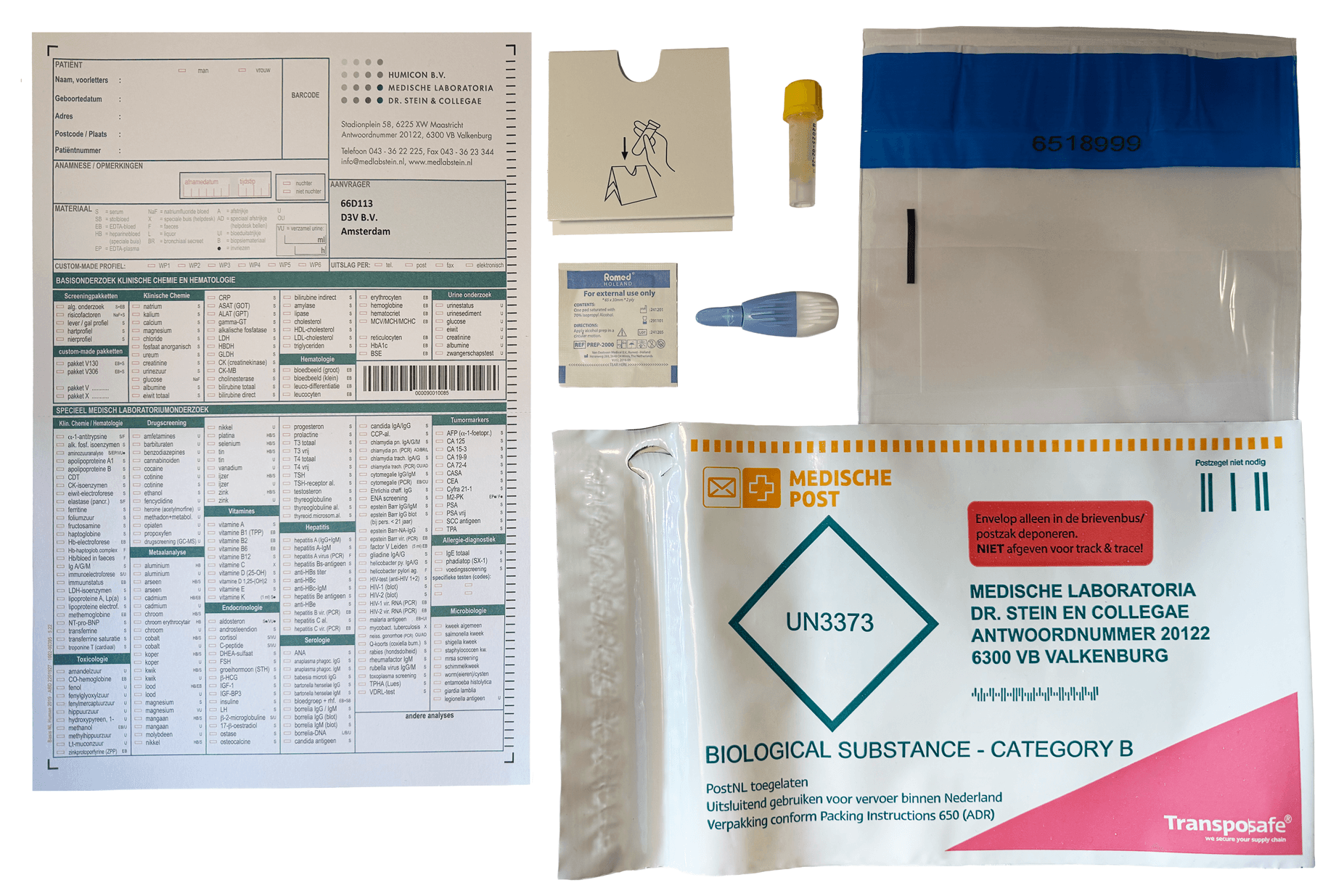
    Receive your fingerstick kit

    You receive a fingerstick kit with clear instructions

  2. 02

    Prick & collect

    Easily collect a few drops of blood yourself

  3. 03

    Mail back

    Return via medical mail to the lab

  4. 04

    Receive your result

    Digitally by email once the analysis is complete.

See fingerstick instructions

What is Insulin?

Insulin is a hormone produced by the pancreas and is essential for regulating blood sugar levels. It helps the body's cells to absorb glucose (sugar) from the blood and use it for energy or store it for future use.

Why test Insulin?

Testing insulin levels can be useful for assessing how well your body regulates glucose. This is especially important for people with diabetes or prediabetes, but also for those who want to monitor their metabolic health. It can assist in diagnosing various conditions, including insulin resistance and type 1 or 2 diabetes.

What does it indicate?

The insulin test can indicate whether your body produces an adequate amount of insulin and how it responds to glucose. It can assist in determining insulin resistance, a precursor to type 2 diabetes, or insulin production problems, such as those found in type 1 diabetes.

What does a high insulin level mean?

A high insulin level may indicate insulin resistance, where your body cells do not respond well to insulin. This can lead to elevated blood sugar levels.

What does a low insulin level mean?

A low insulin level may indicate reduced insulin production by the pancreas, which is characteristic of type 1 diabetes. It can also occur in long-term type 2 diabetes, where the pancreas becomes exhausted.

Preparation and sampling

Fasting: no food for 12 hours before collection

  • Do not eat anything for 12 hours before the sample is taken and drink only water. After a meal the value is many times higher.
  • Do you take biotin (vitamin B8, often in hair and nail supplements)? Stop at least 2 days before the sample is taken, or 4 days for a high dose.
More about fasting and preparation

Risks and downsides of this test

  • Finger prick at home. For about nine in ten people the sample succeeds on the first try. Too little blood or haemolysis (damaged blood cells from squeezing hard) makes the sample unusable and a new kit is needed.
  • No test is one hundred percent reliable. A result can point to something that is not there, or miss something that is. A result is a snapshot and does not make a diagnosis.
  • An abnormal result has consequences. It can lead to follow-up tests with your GP, and to worry that turns out to be unnecessary. Follow-up tests or treatment can have downsides of their own.
  • Incidental findings are not expected with this test. An incidental finding is something other than what you were looking for. During checkout you choose whether you want to be informed about one.
All risks and downsidesOur policy on incidental findings

Sugar and metabolism

Insuline

The hormone that lowers blood sugar; measured fasting, a rough measure of insulin resistance, with limited clinical value.

Everything about this test

What it measures

Insulin is made by the beta cells of the pancreas and makes muscles, liver and fat tissue take up glucose from the blood. If those tissues respond less well to insulin (insulin resistance), the pancreas makes more insulin to keep blood sugar normal; the fasting insulin value then rises while glucose is still normal. Only when the pancreas can no longer keep this up does blood sugar rise and type 2 diabetes develop. The value is always assessed together with the glucose measured at the same moment.

  • Increased insulin release as a sign of insulin resistance in overweight, metabolic syndrome or PCOS
  • The cause of low blood sugar (hypoglycemia), such as an insulin-producing tumor (insulinoma) or use of insulin or diabetes medicines
  • Remaining capacity of the pancreas in known diabetes (in hospital, usually via C-peptide)

High

A raised fasting insulin with a normal glucose fits insulin resistance: the body needs more insulin for the same blood sugar. This mainly occurs with overweight around the belly, little exercise, disturbed fat metabolism (high triglycerides, low HDL), PCOS and during pregnancy. It usually causes no symptoms; it is a risk factor, not a disease. A high insulin with a low glucose is something different and may point to an insulinoma or to use of insulin or sulfonylurea tablets; that belongs with the specialist. Not being fasting, corticosteroids, some antipsychotics and the contraceptive pill also raise the value.

Low

A low fasting insulin with a normal glucose is normal and fits good insulin sensitivity, for example in slim, active people. A low insulin with a high glucose means the pancreas makes too little: that fits type 1 diabetes, long-standing type 2 diabetes or a damaged pancreas. Fasting, heavy exercise and a low-carbohydrate diet lower the value. In people who inject insulin, the measured value says nothing about their own production.

Preparation

  • Do not eat anything for 12 hours before the sample is taken and drink only water. After a meal the value is many times higher.
  • Do you take biotin (vitamin B8, often in hair and nail supplements)? Stop at least 2 days before the sample is taken, or 4 days for a high dose.

If your result is abnormal

The GP assesses a raised insulin together with glucose, weight, blood pressure and fat levels and usually has fasting glucose or HbA1c measured to see whether there is impaired blood sugar or diabetes; an isolated raised insulin does not lead to further testing. With a high insulin combined with low blood sugars, you are referred to an internist (specialist in internal medicine).

Reliability

Fasting insulin is a single value with limited predictive value. Diabetes is diagnosed with fasting glucose, which has fixed cut-off values (the Dutch GP guideline (NHG) on type 2 diabetes mellitus); in known diabetes, HbA1c is monitored. Insulin adds little for detecting diabetes or insulin resistance. The Dutch Society for Clinical Chemistry (NVKC) names as uses the search for an insulinoma or another cause of low blood sugar, and the question of whether someone with diabetes needs insulin. There is no generally accepted cut-off for 'too much' insulin: the measurement is not standardized between laboratories and the spread among healthy people is large. A high value is a sign, not a diagnosis.

Limitations

  • The result depends strongly on when you last ate: being strictly fasting (at least 8 to 12 hours) is essential; after a meal the value is many times higher.
  • Insulin measurements differ between laboratories and measuring methods, sometimes by tens of percent; reference values are not interchangeable and there is no agreed cut-off value.
  • Insulin breaks down quickly: the tube must be processed quickly, and hemolysis (broken red blood cells) falsely lowers the result.
  • In people who inject insulin, have antibodies against insulin or use medicines such as corticosteroids, beta blockers or oral contraception, the value is hard to interpret; heavy exercise, lack of sleep, illness and pregnancy also change the value.

How common is this

Insulin resistance is not a registered diagnosis; there are no figures for the Netherlands on how often a raised fasting insulin occurs. However, in 2024 over 1.1 million people with type 2 diabetes were known to their GP (61 per 1,000 inhabitants), and according to the NHG guideline about 30 percent of people over 60 have impaired fasting glucose or impaired glucose tolerance, in which insulin resistance almost always plays a role.

Who is this useful for

With overweight, a raised blood sugar or suspected diabetes, fasting glucose and HbA1c say more than insulin, and an insulin value changes little about that. The result says the most when looking into unexplained low blood sugars, through the specialist. If you have the value measured out of interest, you should know that there is no agreed cut-off value and that a high result does not lead to treatment with medicines; the advice is then the same as for overweight: exercise more, eat healthier, lose weight.

Downsides and risks

  • A 'raised' insulin without an agreed cut-off value is quickly labeled online as a disease (insulin resistance), while the result varies a lot and the advice is no different from that for overweight.
  • A normal insulin does not rule out disturbed blood sugar; in long-standing type 2 diabetes the value may actually be low.

Sources

  • NVKC, allesovertesten.nl: Insuline
  • NHG-Standaard Diabetes mellitus type 2 (M01)
  • NVKC, allesovertesten.nl: Glucose
  • Thuisarts.nl: Ik heb een grotere kans op diabetes type 2
  • VZinfo (RIVM): Diabetes mellitus, op basis van Nivel Zorgregistraties Eerste Lijn 2024

Always discuss an abnormal result with your GP. If a result is strongly abnormal, we try to reach you as soon as possible. Read your result yourself as well and contact your GP if in doubt. A test does not make a diagnosis. Read more about risks and results

Independent information sources

We recommend consulting these independent sources before ordering a preventive health check.

  • Client brochure PGO (NVvPG, September 2023)
  • RIVM: Health tests
  • Thuisarts.nl
  • Allesovertesten.nl (NVKC)

Practical information

Frequently asked questions

See fingerstick instructionsFull instructions with visual guidance
How does the fingerstick test work from A to Z?

After ordering we ship the collection kit to your home. You prick your fingertip, collect a few drops of blood, return it in the envelope, and receive your result digitally by email.

How do I collect my blood sample?

A small prick on your fingertip lets you collect a few drops into a tube. The instructions include step-by-step photos and video, so no guessing required.

When and how do I receive my result?

Usually 2 to 5 working days after the lab receives your sample. You receive your laboratory report securely by email. It lists the measured values, units, reference ranges and any flags added by the laboratory.

What if the collection doesn't work?

Some people find the fingerstick tricky at first. Warm your hands, hang your arm down, and prick the side of the fingertip for better blood flow. If it still doesn't work, get in touch.

How do I return the collection materials to the lab?

Use the supplied return envelope and place it in the letter-mail bag inside a PostNL service point yourself as soon as possible. Do not hand it to counter staff or request track & trace. The instructions supplied with your test state when it must be sent.

What if I have questions or something doesn't work?

Feel free to contact us via WhatsApp, email or phone. We're happy to help you before, during or after your test. If the collection doesn't work, we'll arrange a solution or send new materials — no hassle.

View all frequently asked questions

Personal help

Contact us

Not sure which test is right for you? We’re happy to help.

WhatsApp+31 (0)412 23 69 61E-mailinfo@bloedcheckup.nlShippingDiscreet mailbox delivery

Weekdays 09:00 – 17:00

Didn't find what you're looking for?Request a custom test

Verified reviews

View allView all reviews

Client experiences

90% recommend us434 verified reviews

“Very positive experience”

From ordering to having my blood drawn, everything went smoothly and was well organised. I really appreciated being able to visit a blood collection location in my own town so quickly. I received clear instructions beforehand, and the results arrived promptly by email too. Very satisfied!

ElineVerified

“Good communication”

This company responds to questions thoroughly and promptly. The entire process, from requesting the test to having blood drawn and receiving the results, runs very smoothly. Overall, I am very satisfied!

Jacques QuipèreVerified

“Wide choice of tests, fast and affordable”

You can choose the tests yourself. Fast delivery and processing, clear instructions and affordable.

SMVerified

“I am satisfied with the service”

I received a referral by email, just like from a GP. I did not have to send anything by post and could quickly visit a local blood collection centre. The results were fast and clear. The price was good, not too expensive, and all messages were secure.

kraljicaVerified

“A very good experience”

A very good experience! I received quick answers to my questions, a custom blood test was put together, everything was arranged smoothly, and I could have my blood drawn by a healthcare professional nearby. The results were available within a few days. In short, very satisfied!

PhilVerified

“Very good customer service”

The customer service is very good. I had a complex request, which caused an issue at the blood collection centre. Customer service resolved it very well. They also offer a wide range of tests at a reasonable price.

Marc EekhoutVerified

“Everything was well organised”

Everything was well organised. The products were delivered within a few days and, after sending in the samples, the results arrived within a few days too. Communication and information throughout the process were clear and friendly.

martijnVerified

“Fantastic service”

Fantastic service! Very good customer service that responds quickly and thinks along with you. Good prices. I will definitely use BloedCheckup's services again.

kambalesVerified

“Very happy to have found this business”

Very happy to have found this business. We need to check our blood more often :) The process was easy. They sent me the kit at home, then I had to go to a clinic with the papers and they knew what they had to do. I got the results in less than a week.

DenisaVerified

“Smooth process and good support”

Amazing website experience. I ordered various tests for 2 people. We went to one of the supported centers and took samples. Also after the results were ready, I needed a letter from the laboratory and they prepared the letter for me in no time. Definitely recommended.

Majid HajiheidariVerified

“Amazing service!”

Received a packet with everything needed, went to a walk in clinic (Amsterdam DC Clinic) where my blood was drawn and I was out the door within 5 minutes, and then after posting the samples, received results 2 days later. Results were easy to understand as well. Amazing service, would highly recommend!

Trudi CoetzeeVerified

“Great customer service”

I ordered a test through bloedcheckup.nl but later realized I no longer needed it. I contacted their support team, and they were very quick, responsive, and helpful in handling my cancellation. The whole process was smooth and efficient. Great customer service!

Elif Göksu BecerikVerified
BBloedCheckupLab made simple

Blood tests that actually tell you something — working with ISO-certified laboratories. Fast results, no GP referral required.

— / 5
info@bloedcheckup.nl+31 (0)412 23 69 61

Tests

  • Blood tests
  • At-home tests
  • Test packages
  • Fingerprick at home
  • Collection points
  • Custom test

Service

  • How blood collection works
  • How at-home tests work
  • Collection points
  • Laboratories
  • Quality & oversight
  • Tests A-Z
  • Fasting requirements
  • Shipping

Contact

  • Contact
  • Frequently asked questions
  • Client reviews
  • For businesses
  • Complaints policy

Legal

  • Privacy Policy
  • Terms & Conditions
  • Disclaimer
  • Return policy
  • Reportable diseases
  • Incidental findings
  • Risks
Popular
  • Hormones
  • ·Vitamins
  • ·STD test
  • ·Fingerprick at home
  • ·Urine test at home
  • ·Test packages
  • ·Collection points
© 2026 D3V B.V.·Chamber of Commerce 96924403 · VAT NL867835187B01
·
4.6 / 54.6 / 5 Trustpilot
4.6 / 5 on Trustpilot