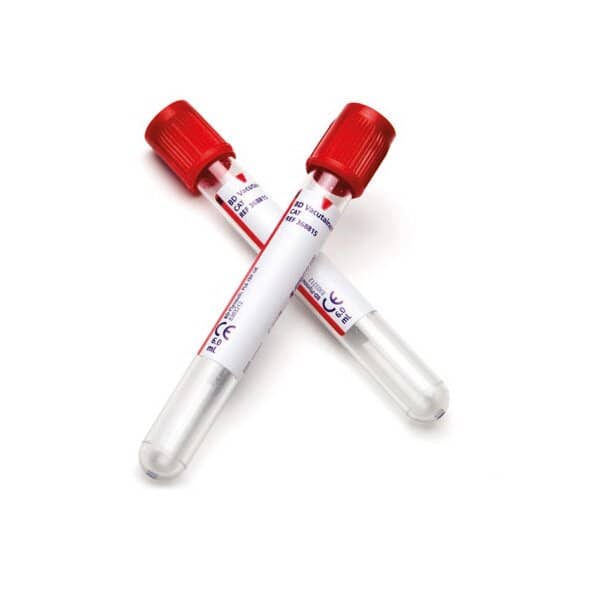
Blood draw
Antithrombin III
Measures the activity of antithrombin, a natural inhibitor of clotting. For people who had thrombosis at a young age or without a clear cause.
€ 41,00
Your privacy
Necessary cookies keep the website working.
With your consent, we use additional cookies to:
We may share visited pages, interactions and device data with 5 service providers.
Hashed contact details are shared only with marketing consent.
You can change this later through Cookie preferences at the bottom of every page.
More information is available in our privacy policy.
Other analyses · Blood
A natural inhibitor of blood clotting; a shortage gives a higher risk of thrombosis.
At a glance
Antithrombin III activity
Explanation
Antithrombin (formerly called antithrombin III) is a protein from the liver that slows down clotting. It switches off thrombin and some other clotting factors, so that a clot does not grow larger than needed. Heparin, an anticoagulant, works by strengthening antithrombin. This test measures the activity of antithrombin in percent of normal: how well the antithrombin that is present does its inhibiting work.
Result
A raised antithrombin activity has, as far as is known, no clinical meaning. It does not cause symptoms or an extra risk of bleeding. With the use of a coumarin, the value can be slightly higher. A raised value is not followed by further testing.
A low activity means that clotting is held back less well, so that according to the Dutch Society for Clinical Chemistry (NVKC) the risk of thrombosis increases, even with a slight decrease. An acquired shortage is more common than a hereditary shortage: with liver disease, with protein loss through the kidneys (nephrotic syndrome), during or shortly after a thrombosis or surgery, with heparin use, with preeclampsia and with the use of estrogens, such as in the contraceptive pill. A hereditary shortage is rare and often goes with thrombosis at a young age and thrombosis in family members. A low value does not cause symptoms by itself; symptoms only develop when a thrombosis occurs, such as a swollen, painful leg or shortness of breath.
With a low value, the GP repeats the test at a time without thrombosis, surgery or heparin use, and checks liver function and protein loss in the urine. If the activity stays low without an explanation, referral follows to an internist-hematologist for further testing, such as the amount of antithrombin, and testing of family members if needed. A confirmed hereditary shortage can affect how long anticoagulants are used after a thrombosis and the precautions around surgery and pregnancy.
Reliability
A single low value is not a diagnosis. According to the Dutch Society for Clinical Chemistry (NVKC), a low value is repeated at a later time; a hereditary shortage is only diagnosed with repeated measurements, a measurement of the amount of antithrombin and preferably testing of family members. The Dutch medical specialists' guideline (FMS) on antithrombotic treatment advises against routine testing for hereditary thrombophilia (a hereditary increased clotting tendency), both after a thrombosis and when choosing the contraceptive pill, because the result usually does not change the treatment.
Who it is for
Useful at a doctor's request with a thrombosis at a young age or in an unusual place, with repeated thrombosis without a clear trigger, when heparin does not work well enough, and with a known hereditary antithrombin shortage in the family as part of family testing. According to the FMS guideline, testing for a hereditary clotting tendency is not useful for deciding whether you can use the contraceptive pill; with thrombosis in the family, the choice of contraception is weighed based on the family history. In people without thrombosis and without a known shortage in the family, a single value says little.
A hereditary antithrombin shortage is rare: an estimated 1 in 2000 to 5000 people. An acquired shortage, for example with liver disease, protein loss or around a thrombosis or surgery, is more common. Thrombosis itself usually has another cause, such as surgery, long periods of bed rest, pregnancy or the contraceptive pill.
Estimate from professional knowledge; NVKC; no Dutch registration figure checked
Get tested
Antithrombin III activity is part of these test panels. You order online and have your blood drawn at a collection point or collect the sample at home.
Evidence
This explanation is based on Dutch guidelines and independent information. It is general information, not a diagnosis. Discuss an abnormal result with your GP.
More about risks and results