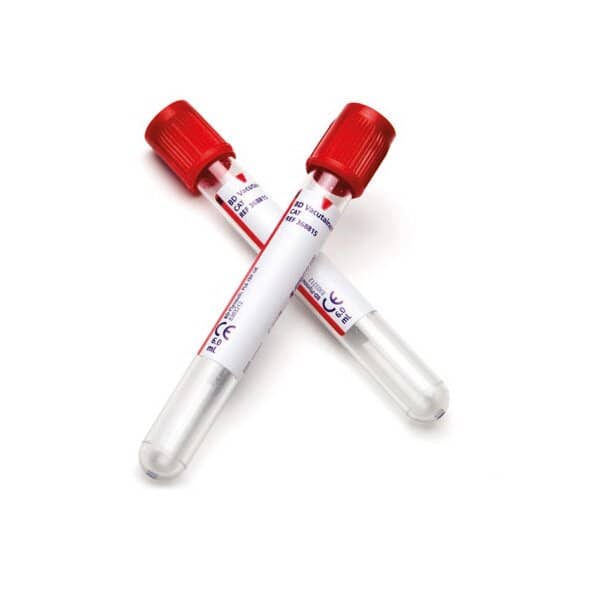
Blood draw
HIV-1 RNA (PCR)
Uses PCR to measure how much HIV-1 virus is in your blood (viral load). Mainly for people with a known HIV infection; not the standard HIV test.
€ 334,00
Your privacy
Necessary cookies keep the website working.
With your consent, we use additional cookies to:
We may share visited pages, interactions and device data with 5 service providers.
Hashed contact details are shared only with marketing consent.
You can change this later through Cookie preferences at the bottom of every page.
More information is available in our privacy policy.
Other analyses · Blood
Measures how much HIV-1 virus is in the blood (viral load); mainly for monitoring a known HIV infection.
At a glance
Explanation
HIV (human immunodeficiency virus) is a virus that breaks down the immune system if it is not treated. This test uses PCR, a technique that copies genetic material, to look for the genetic material (RNA) of HIV-1 in the blood and measures how much of it is present: the viral load, in copies per milliliter. So it is not an antibody test. In people with a known HIV infection, the viral load shows how well the HIV medicines are working; HIV-2, a rarer form, is not measured by this test.
Result
A measurable viral load means that HIV-1 RNA was found in the blood. In someone with HIV who does not take HIV medicines, this is expected; in someone who is being treated, it may point to medicines that are not taken properly or no longer work well, although a single slight rise says little on its own. The higher the viral load, the greater the chance of passing on HIV. In someone without known HIV, a measurable value may fit a recent infection, but a low value in particular can also be falsely positive; an HIV infection is only diagnosed with a combination test and a confirmation test.
An undetectable viral load means that no HIV-1 RNA was found, or too little to measure. In someone who takes HIV medicines, this means that the treatment is working; according to the LCI guideline (RIVM), someone with an undetectable viral load on treatment (less than 200 copies per milliliter) cannot pass on HIV through sex: undetectable equals untransmittable. In someone without known HIV, an undetectable value makes an infection less likely, but does not rule it out. In the first 1 to 2 weeks after infection the virus often cannot be measured yet, HIV-2 and sometimes an unusual variant of HIV-1 are missed, and someone who uses PrEP or PEP can have an undetectable value despite an infection.
With a measurable viral load in someone without known HIV, a combination test and a confirmation test (immunoblot) follow; only these establish the diagnosis. With a confirmed infection, a quick referral to an HIV treatment center follows, along with testing for other STIs and a discussion about informing sexual partners. With a known HIV infection, the HIV treatment center assesses a measurable value during treatment. HIV is not notifiable; new diagnoses are registered by Stichting HIV Monitoring.
Reliability
According to the LCI guideline (RIVM), the sensitivity and specificity of current HIV PCR tests approach 100 percent, and HIV RNA can be detected in the blood on average 9 to 11 days after infection. Even so, according to the guideline, PCR is not suitable as a routine screening test for HIV: because of the chance of a false-negative result and the small gain in early detection, the combination test for antibodies and p24 antigen is the first choice. The test says the most when monitoring a known HIV infection, and alongside the combination test when a very recent infection is suspected. A low measurable value in someone without known HIV can be falsely positive and is always checked.
Who it is for
The test is mainly useful for people with a known HIV infection, to see whether treatment is suppressing the virus. When a very recent infection is suspected, for example with flu-like symptoms two to six weeks after a risky contact, it can give an answer sooner alongside the combination test for antibodies and p24 antigen. To find out whether you have HIV, the combination test (HIV serology) is the first choice. If the risky contact was less than 72 hours ago, quickly contacting the GGD (municipal public health service) or the emergency department about PEP, medicines that can prevent infection, is more important than a test.
In the Netherlands, HIV mainly occurs in men who have sex with men. In 2025, 631 people with a new HIV diagnosis were registered, and at the end of 2025, 23,547 people with HIV were registered with the HIV treatment centers. Of the people with HIV who are being treated, 96 percent have a suppressed viral load (Stichting HIV Monitoring, 2021).
RIVM (figures 2025); LCI guideline HIV infection (Stichting HIV Monitoring 2022)
Get tested
HIV-1 RNA (PCR) is part of these test panels. You order online and have your blood drawn at a collection point or collect the sample at home.
Evidence
This explanation is based on Dutch guidelines and independent information. It is general information, not a diagnosis. Discuss an abnormal result with your GP.
More about risks and results