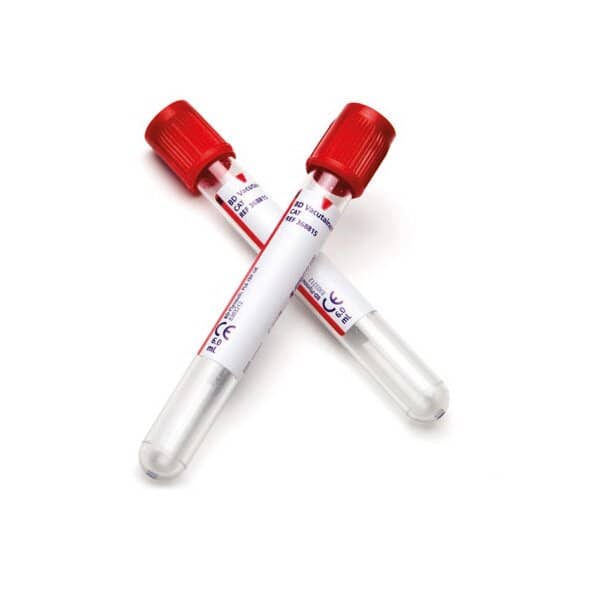
Blood draw
Inhibin B
Measures inhibin B, a hormone from the egg follicles and the testes. As an addition to fertility testing, alongside AMH, FSH or semen analysis.
€ 135,00
Your privacy
Necessary cookies keep the website working.
With your consent, we use additional cookies to:
We may share visited pages, interactions and device data with 5 service providers.
Hashed contact details are shared only with marketing consent.
You can change this later through Cookie preferences at the bottom of every page.
More information is available in our privacy policy.
Other analyses · Blood
A hormone from the egg follicles and the testes; gives an impression of egg reserve or sperm production, but says little on its own.
At a glance
Explanation
Inhibin B is a hormone made in women by the cells around growing egg follicles in the ovaries, and in men by the cells in the testes that support sperm production (Sertoli cells). Inhibin B suppresses the production of FSH in the pituitary gland. In women, the value is mainly interpretable at the start of the cycle and falls with age, as the egg reserve declines. In men, the value is related to the amount of sperm the testes produce.
Result
A high value in women fits many growing follicles, for example in young women, in PCOS (polycystic ovary syndrome) or during treatment with fertility hormones. In men, a normal to high value fits good testicular function. A high value does not mean you are extra fertile. Rarely: a strongly raised value in a woman fits a hormone-producing growth of the ovary; this is not diagnosed with this single measurement.
In women, a low value fits fewer growing follicles, such as with aging, in the years before menopause, or after chemotherapy or radiotherapy. After menopause, inhibin B is normally no longer measurable. A low value does not predict whether you will get pregnant, nor when menopause will start. In men, a low value, especially together with a high FSH, can fit reduced sperm production; even then, the semen analysis is what decides.
With an unfulfilled wish to have children for a year or longer, the usual fertility testing follows through the GP: cycle information, chlamydia antibodies and semen analysis. In a man with a low value, a high FSH or an abnormal semen analysis, referral to a urologist specializing in andrology may follow; in a woman with signs of a severely reduced egg reserve, referral to a gynecologist.
Reliability
Inhibin B has little predictive value as a single measurement. According to the NVOG guideline on initial fertility testing, it has not been shown that the value predicts the chance of a natural pregnancy, and unlike FSH, inhibin B does not predict the response to hormone stimulation in IVF well either. In men, according to the guideline on male subfertility, inhibin B adds nothing in routine testing beyond testosterone, LH, FSH and semen analysis; only in a shortage of hormones from the pituitary gland can the value say something about the expected response to treatment. There are no agreed cut-off values for the value itself.
Who it is for
The value means most as part of testing for an unfulfilled wish to have children: in women together with AMH and FSH, in men together with FSH, testosterone and semen analysis. As a single test, inhibin B is not suitable for determining whether you can get pregnant, whether you can postpone having children, or when menopause will start. For men, semen analysis gives the most direct information about sperm quality.
About 1 in 10 couples is not yet pregnant after a year of trying. The woman's age is the most important factor: from about age 30, fertility declines every year. How often an abnormal inhibin B occurs in people without symptoms is not well known.
NHG guideline on subfertility and Thuisarts.nl
Get tested
Inhibin B is part of these test panels. You order online and have your blood drawn at a collection point or collect the sample at home.
Evidence
This explanation is based on Dutch guidelines and independent information. It is general information, not a diagnosis. Discuss an abnormal result with your GP.
More about risks and results