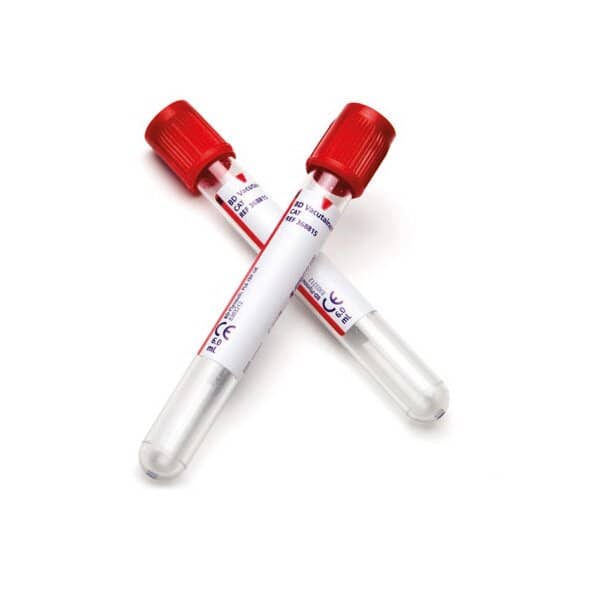
Blood draw
HTLV-1/2
Measures antibodies against HTLV-1 and HTLV-2, viruses that cause a lasting infection. For people with roots in an area where HTLV is common.
€ 50,00
Your privacy
Necessary cookies keep the website working.
With your consent, we use additional cookies to:
We may share visited pages, interactions and device data with 5 service providers.
Hashed contact details are shared only with marketing consent.
You can change this later through Cookie preferences at the bottom of every page.
More information is available in our privacy policy.
Other analyses · Blood
Antibodies against HTLV-1 and HTLV-2, viruses that cause a lasting infection; show whether you carry the virus.
At a glance
HTLV-1/2 antibodies
Explanation
HTLV-1 and HTLV-2 (human T-cell lymphotropic virus) are retroviruses that infect certain white blood cells (T cells) and remain in the body for life. They are passed on through sex, through blood (shared needles, blood transfusion or transplantation) and from mother to child, mainly through breastfeeding. This test measures antibodies against both viruses. It is a screening test: a positive result must be confirmed with a second test, which also shows whether it is HTLV-1 or HTLV-2.
Result
A positive screening test means that there may be antibodies against HTLV; only a confirmation test shows whether there really is an infection and of which type. If the infection is confirmed, the virus stays in the body for life; there is no treatment that removes the virus. Most people with HTLV-1 never get symptoms: according to the WHO, 5 to 10 percent develop a condition linked to the virus, such as HAM/TSP (a slowly increasing paralysis of the legs, lifetime risk about 2 percent), an eye inflammation or a skin inflammation. Rarely: after many years, a type of blood cancer develops (ATL); the WHO estimates the lifetime risk of this with HTLV-1 at about 5 percent. HTLV-2 causes disease much less often. You can pass on the virus through sex, blood and breastfeeding.
A negative result means that no antibodies against HTLV-1 or HTLV-2 were found; an infection is then unlikely. Shortly after an infection, antibodies cannot yet be detected, so a test right after a risk contact can still be negative.
With a positive result, a confirmation test follows, usually through an infectious disease specialist. With a confirmed infection, the GP refers to an infectious disease specialist for explanation and monitoring, and with leg symptoms to a neurologist; advice covers condom use, not donating blood or organs and, for mothers, advising against breastfeeding. HTLV is not notifiable in the Netherlands.
Reliability
According to the WHO, no single test can establish an HTLV infection on its own. The diagnosis is based on an antibody test like this one, followed by a confirmation test: an immunoblot or line assay, or a PCR on viral DNA in white blood cells. This confirmation also distinguishes between HTLV-1 and HTLV-2. In people without risk factors, a positive screening test relatively often cannot be confirmed.
Who it is for
Useful if you, your mother or a sexual partner come from an area where HTLV-1 is common, especially with a wish to have children or a pregnancy, because the virus can be passed on through breastfeeding, and after sharing needles. Also with symptoms that may fit the virus, such as slowly increasing stiffness or weakness of the legs or an unexplained eye inflammation. In people without such a background or risk, the chance of an infection is very small and a positive screening test more often cannot be confirmed.
Worldwide, an estimated 5 to 10 million people live with HTLV-1. The virus is common in, among other places, Japan, the Caribbean, South America, large parts of Africa and Iran, and is rare in the rest of Europe. In the Netherlands, it is mainly seen in people who themselves, or whose mother, come from such an area, such as Suriname and the Caribbean islands; reliable figures for the Netherlands are lacking.
WHO; UK Health Security Agency; NTvG 2020
Get tested
HTLV-1/2 antibodies is part of these test panels. You order online and have your blood drawn at a collection point or collect the sample at home.
Evidence
This explanation is based on Dutch guidelines and independent information. It is general information, not a diagnosis. Discuss an abnormal result with your GP.
More about risks and results