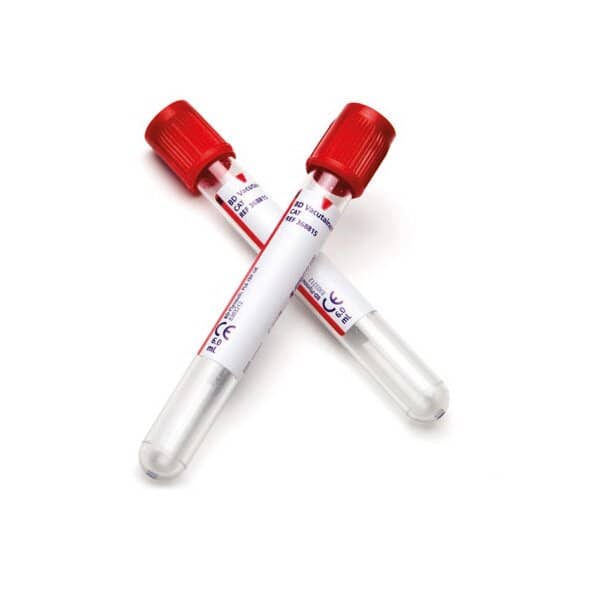
Blood draw
Rubella (German measles) IgG
Measures IgG antibodies against rubella (German measles). Mainly for women who want to have children and are not sure whether they are vaccinated and protected.
€ 31,00
Your privacy
Necessary cookies keep the website working.
With your consent, we use additional cookies to:
We may share visited pages, interactions and device data with 5 service providers.
Hashed contact details are shared only with marketing consent.
You can change this later through Cookie preferences at the bottom of every page.
More information is available in our privacy policy.
Other analyses · Blood
Antibodies against rubella (German measles); show whether you are protected by vaccination or a past infection.
At a glance
Explanation
Rubella (German measles) is a viral infection that is usually mild, but is dangerous for an unborn child if the mother catches it in the first half of pregnancy. After an infection or after the MMR vaccine (mumps, measles, rubella), the immune system makes IgG antibodies against the virus; after an infection they remain present for life. This test measures those IgG antibodies. The laboratory reports the amount in IU/ml; according to the LCI guideline (RIVM), most laboratories and the WHO use 10 IU/ml as the threshold for protection.
Result
A positive result, above the laboratory's threshold, means that you have antibodies against rubella and are considered protected. This is usually due to the MMR vaccine, which all children in the Netherlands have been offered since 1987, or to an infection in the past. A new infection is then rare and rarely causes symptoms; according to the LCI guideline (RIVM), the risk for an unborn child is then also very small. IgG does not show when you got the antibodies; with symptoms that look like rubella, a positive IgG does not rule out a recent infection.
A negative result means that no or too few antibodies were found. If you have never been vaccinated, you are probably not protected against rubella. If you have been vaccinated, a negative result does not mean for certain that you are unprotected: the tests are designed for the high amount of antibodies after an infection, and according to the LCI guideline (RIVM), two thirds to three quarters of vaccinated people with a negative test turned out to be protected after all. According to the LCI guideline, one vaccination also counts as sufficient protection.
With a negative result and no vaccination, the GP can give an MMR vaccination, preferably at least one month before a pregnancy; after the vaccine you need to avoid pregnancy for 4 weeks, and during a pregnancy vaccination only takes place after giving birth. With a negative result after one earlier vaccination, a second vaccination can be considered, but after two vaccinations not, according to the LCI guideline (RIVM); checking antibodies after vaccination is not needed. Rubella is notifiable (group B2), but a positive IgG points to protection and is no reason for a notification.
Reliability
According to the screening policy in the LCI guideline (RIVM) on rubella, the IgG test distinguishes well between who is and who is not protected in people who have never been vaccinated. In vaccinated people, the test is less suitable: after vaccination, the amount of antibodies is lower, so the test is more often negative while there is protection. According to the guideline, there is actually no good measure of protection in vaccinated people, and testing vaccinated people is not considered necessary. The threshold of 10 IU/ml partly depends on the test and the manufacturer.
Who it is for
Useful for women who want to have children and are not sure whether they have been vaccinated against rubella, or know that they have not, especially if they work in healthcare or with young children, come from a country with lower vaccination coverage, or were not vaccinated for reasons of principle; they can then get vaccinated before pregnancy. In women who have demonstrably been vaccinated, the test adds little according to the LCI guideline (RIVM) and often gives a needlessly worrying result. This test is not suitable to show a recent infection; IgM or a PCR is needed for that.
Since vaccination, rubella hardly occurs in the Netherlands anymore: usually fewer than 5 infections per year, with an occasional outbreak among unvaccinated groups (in 2013, 57 people became ill). Vaccination coverage is between 90 and 95 percent, and about 95 percent of the population has antibodies. Protection is lower in some groups that do not vaccinate for religious reasons and in some people who came to the Netherlands as adults.
RIVM; LCI guideline Rubella and appendix Rubella screening policy
Get tested
Rubella IgG is part of these test panels. You order online and have your blood drawn at a collection point or collect the sample at home.

Blood draw
Measures IgG antibodies against rubella (German measles). Mainly for women who want to have children and are not sure whether they are vaccinated and protected.
€ 31,00

Blood draw · 2 analyses
Measures IgG and IgM antibodies against rubella: whether you are protected and whether there are signs of a recent infection. For symptoms or after contact.
€ 51,00
Evidence
This explanation is based on Dutch guidelines and independent information. It is general information, not a diagnosis. Discuss an abnormal result with your GP.
More about risks and resultsMore explanations