Gut
HPL-complex
A pyrrole compound in urine that some providers link to 'kryptopyrroluria'; its meaning has not been established.
Everything about this testWhat it measures
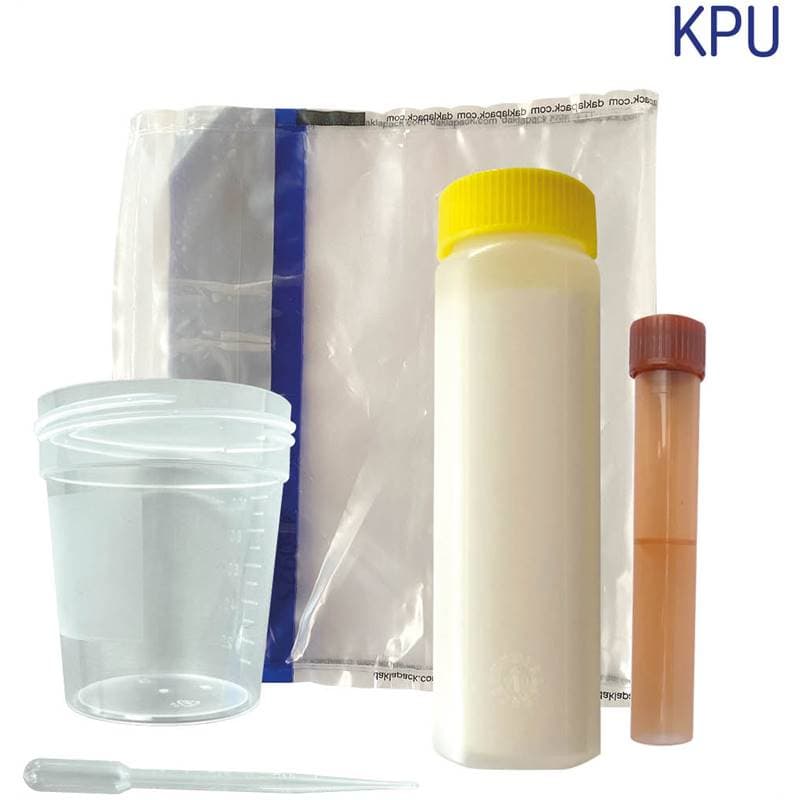
HPL (hydroxyhemopyrrolin-2-one) is a pyrrole compound that can be measured in the urine. The substance was described in the nineteen-fifties as the 'mauve factor' in the urine of psychiatric patients. Some providers link a raised value to 'kryptopyrroluria' or 'KPU', in which the body is said to lose too much zinc and vitamin B6. This condition is not recognized in mainstream medicine.
- No recognized condition; some providers use the result for the disputed condition 'kryptopyrroluria' (KPU)
High
As far as is known, a raised HPL value has no established meaning. A systematic literature review from 2021 found no clear evidence that a raised HPL is linked to mental health symptoms, that it goes with more loss of zinc or vitamin B6 in the urine, or that high doses of zinc and vitamin B6 then help. A raised value is therefore no reason to assume that you have a deficiency. A raised value does not cause symptoms by itself.
Low
A low or undetectable value is the usual result and has no meaning. A low value also says nothing about the amount of zinc or vitamin B6 in the body; if there is a reason, those are measured in blood. A low value does not cause symptoms.
Preparation
- Your last meal was at least 8 hours ago.
- Collect the first morning urine.
- Stop taking vitamin B6 and zinc a week beforehand.
- Do you have a bladder infection? Then do the test later.
If your result is abnormal
A raised HPL value on its own is no reason for further tests or treatment. With symptoms that fit a shortage of zinc or vitamin B6, the GP can have these substances measured in blood.
Reliability
HPL in urine has no established medical meaning. According to a systematic literature review (Warren et al., 2021), HPL is a poorly studied marker with an unclear link to symptoms, and the measurement method still needs to be validated. The result is therefore not suitable for screening or as a basis for treatment.
Limitations
- There is no standardized measurement method; results from different laboratories cannot be compared.
- There are no reliable reference values based on research in healthy people and patients.
- The effect of diet, medicines and the handling of the sample on the result has not been studied well.
How common is this
There are no reliable figures on how often a raised HPL occurs. 'Kryptopyrroluria' is not a recognized diagnosis, so there are also no figures on how common it is.
Who is this useful for
According to current knowledge, there is no group in whom the result says something about a condition. With symptoms such as low mood, anxiety or tiredness, a raised HPL is not an explanation. If there is a reason, zinc or vitamin B6 can be measured directly in blood.
Downsides and risks
- A raised result can lead to the wrong conclusion that you have 'KPU', with unnecessary worry and long-term use of high doses of zinc and vitamin B6; too much vitamin B6 can cause nerve damage, with tingling or numbness in the hands and feet.
Sources
- UMC Utrecht, Bepalingenwijzer: Organische zuren (urine)
- ACMG technische standaard: Laboratory analysis of organic acids, 2018 update (Gallagher e.a., Genetics in Medicine)
- Verbeke e.a., Towards microbial fermentation metabolites as markers for health benefits of prebiotics (Nutrition Research Reviews, 2015)
- Erfelijkheid.nl: Stofwisselingsziektes
- RIVM, Hielprik: ziekten die de hielprik opspoort
- Warren e.a., Pyroluria: Fact or Fiction? Systematisch literatuuroverzicht (J Altern Complement Med, 2021; PMID 33902305)
Always discuss an abnormal result with your GP. If a result is strongly abnormal, we try to reach you as soon as possible. Read your result yourself as well and contact your GP if in doubt. A test does not make a diagnosis. Read more about risks and results