Allergy and intolerance
Methylhistamine
Methylhistamine in urine is a breakdown product of histamine; the result is mainly informative when mastocytosis is suspected.
Everything about this testWhat it measures
The analysis measures how much methylhistamine is excreted in the urine. Histamine is released from mast cells, for example during an allergic reaction, and is quickly converted in the body into methylhistamine. Because histamine itself can only be measured for a short time, the laboratory prefers to measure this breakdown product. The result gives an impression of how much histamine was released during the collection period.
- A sign of increased mast cell activity, as part of testing for mastocytosis
- Support in assessing recurring symptoms that fit the release of mast cell substances
High
A raised value fits the release of histamine from mast cells. This can fit mastocytosis, a rare condition in which there are too many mast cells, but also an allergic reaction shortly before or during the collection period. Food rich in histamine or bacterial conversion in the bowel can also raise the value. A raised value is therefore not a diagnosis and always needs to be assessed together with the symptoms and with the tryptase in blood.
Low
A normal or low value means that little histamine was released during the collection period. This does not rule out mastocytosis: the value can be normal between attacks. A low value also says nothing about an allergy; other tests are needed for that.
Preparation
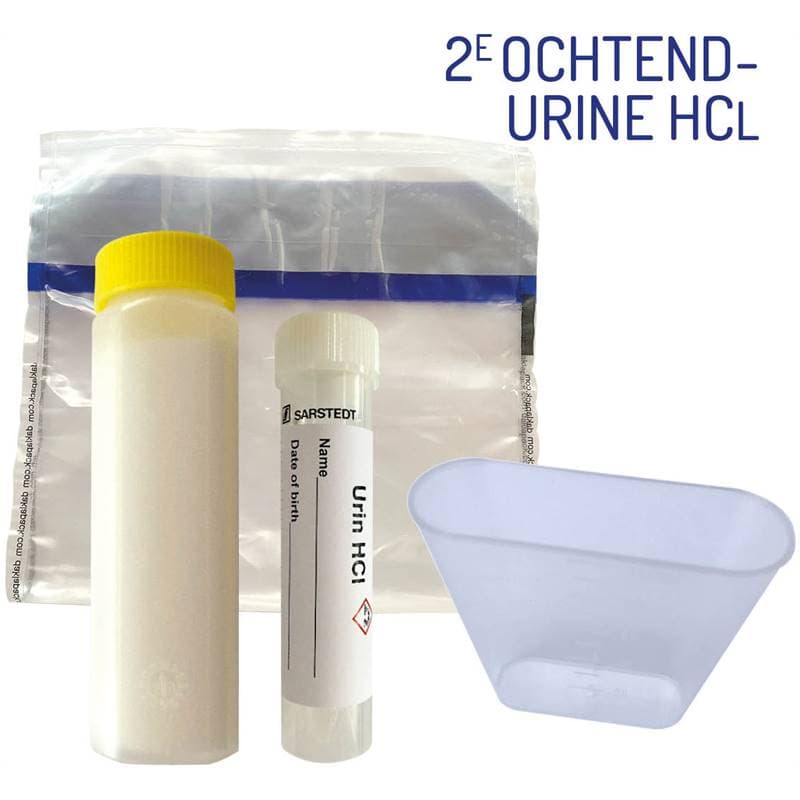
- After getting up, first pass urine into the toilet as usual, then collect the second morning urine.
- You may have breakfast, but drink no more than 1 glass of water and no coffee before the second urine.
- Avoid caffeine, nicotine and alcohol for 2 days beforehand.
- Do not exercise in the 8 hours before collecting the sample.
- Do you take medication? Then check with your doctor.
- Do not collect urine during your period.
If your result is abnormal
When mastocytosis is suspected, the doctor first measures the baseline tryptase in blood and examines the skin; if needed, referral to a specialized center for further testing follows. An abnormal methylhistamine value alone does not lead to any set follow-up testing.
Reliability
The result is mainly informative when mastocytosis is suspected, in combination with the tryptase in blood; in people without symptoms, a single value says little. According to the Dutch medical specialists' guideline (FMS) on mastocytosis, the baseline tryptase in blood is the most important test; methylhistamine is an additional measure of the release of mast cell substances. The test is not a test for histamine intolerance: there is no recognized laboratory test for that diagnosis. A single urine sample varies strongly with how much you drink and with what you ate the day before. That is why the result is usually corrected for the creatinine content, or urine is collected over 24 hours.
Limitations
- Food rich in histamine, such as aged cheese, wine, fish that has not been kept properly chilled and fermented products, can raise the result.
- The value can be normal between attacks; the moment of collection strongly determines what you measure.
- The test usually requires urine collected over 24 hours and kept chilled; with an incomplete collection or one kept warm, the result is not correct.
- There are no agreed cutoff values; laboratories use different methods and reference values.
How common is this
Mastocytosis is a rare condition. Symptoms that fit the release of mast cell substances, such as flushing, itching, hives, abdominal symptoms and dizziness, are much more often due to other causes. The diagnosis of mastocytosis is based on, among other things, tryptase in blood and a bone marrow examination.
Who is this useful for
The result is mainly informative when mastocytosis is suspected, for example with repeated severe allergic reactions without a clear cause or with skin abnormalities that fit it. It is not a screening test: in people without symptoms, the result adds nothing. With vague symptoms related to food, the result cannot be interpreted.
Downsides and risks
- A raised value due to food or a recent allergic reaction can wrongly be read as a sign of mastocytosis.
- The result is easily used as proof of histamine intolerance, while there is no recognized laboratory test for that diagnosis.
Sources
Always discuss an abnormal result with your GP. If a result is strongly abnormal, we try to reach you as soon as possible. Read your result yourself as well and contact your GP if in doubt. A test does not make a diagnosis. Read more about risks and results