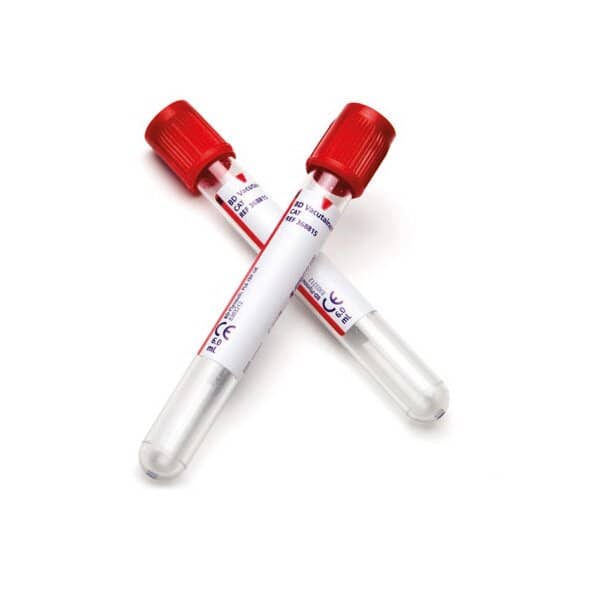
Blood draw · 2 analyses
Dengue (IgG and IgM)
Measures IgG and IgM antibodies against the dengue virus (dengue fever). To find out whether you have had dengue, or with symptoms after tropical travel.
€ 80,00
Your privacy
Necessary cookies keep the website working.
With your consent, we use additional cookies to:
We may share visited pages, interactions and device data with 5 service providers.
Hashed contact details are shared only with marketing consent.
You can change this later through Cookie preferences at the bottom of every page.
More information is available in our privacy policy.
Other analyses · Blood
Antibodies against the dengue virus (dengue fever); point to a past infection, but can also come from related viruses.
At a glance
Explanation
Dengue (dengue fever) is a viral infection you can catch from a mosquito bite in (sub)tropical areas. There are four types of dengue virus. After an infection, the immune system makes IgG antibodies that remain detectable for a long time and usually protect for life against the same type, but not against the other types. This test measures those IgG antibodies. Because the dengue virus is related to, among others, the Zika virus, the yellow fever virus and the tick-borne encephalitis virus, antibodies against those viruses, also after vaccination, can make the test positive.
Result
According to the LCI guideline (RIVM), a positive result points to a past dengue infection, but it is not certain that the antibodies are really directed against dengue: an infection or vaccination against a related virus, such as yellow fever, Japanese encephalitis or tick-borne encephalitis, and a dengue vaccination can also make the result positive. After a first infection, the chance of severe dengue is higher if you later become infected with another type. A single IgG does not show when the infection took place and therefore does not simply explain current symptoms.
A negative result means that no antibodies against dengue were found; you have then probably not had dengue yet. In the first days of a first infection, IgG cannot yet be detected, so a negative result does not rule out an infection when symptoms have just started.
With a positive IgG without symptoms, no treatment is needed; a travel clinic or the GGD (municipal public health service) uses the result, together with your travel and vaccination history, for the vaccination advice. With symptoms, testing for a recent infection follows with IgM and a second blood draw after about 14 days, or in the first week with an NS1 antigen test or PCR. Dengue is not notifiable in the European Netherlands; only in the Caribbean Netherlands (Bonaire, Sint Eustatius and Saba) is it notifiable in group C.
Reliability
According to the LCI guideline (RIVM) on dengue, a positive IgG is seen as an indication of a past infection, but it cannot be said with certainty that the antibodies are specific to dengue, because of cross-reaction with related viruses. Your travel history and earlier vaccinations are therefore needed to interpret the result. A neutralization test can make the result more accurate, but is not done routinely.
Who it is for
Useful for people who have lived or traveled for a long time in (sub)tropical areas and want to know whether they have ever had dengue, for example for advice on dengue vaccination before a new trip; according to the LCI guideline (RIVM), vaccination is mainly recommended for people who have had dengue before. With symptoms after travel, the test only says something together with IgM. Without a stay in an area where dengue occurs, the test is not useful.
In the European Netherlands, dengue is a disease brought back by travelers; an infection caught in the Netherlands itself has not yet been found. Laboratories registered on average 136 positive dengue results per year in 2014 to 2019, 367 in 2023 and 544 in 2024. In the Caribbean part of the Kingdom, dengue occurs every year, sometimes with large outbreaks. An estimated 60 to 80 percent of infections cause few or no symptoms.
LCI guideline Dengue (RIVM, weekly virological reports); RIVM
Get tested
Dengue IgG is part of these test panels. You order online and have your blood drawn at a collection point or collect the sample at home.
Evidence
This explanation is based on Dutch guidelines and independent information. It is general information, not a diagnosis. Discuss an abnormal result with your GP.
More about risks and results