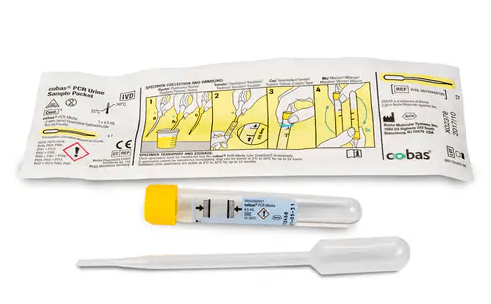
Urine
Benzodiazepines
A urine test for benzodiazepines, sleeping pills and tranquilizers such as oxazepam and diazepam. For a medical question or monitoring your own use.
€ 53,00
Your privacy
Necessary cookies keep the website working.
With your consent, we use additional cookies to:
We may share visited pages, interactions and device data with 5 service providers.
Hashed contact details are shared only with marketing consent.
You can change this later through Cookie preferences at the bottom of every page.
More information is available in our privacy policy.
Metals, toxins and medication · Urine
A urine test for benzodiazepines shows whether sleeping pills or tranquilizers have been used in the past days to weeks.
At a glance
Benzodiazepines (urine)
Explanation
Benzodiazepines are medicines for anxiety, restlessness and sleep problems, such as oxazepam, diazepam, temazepam and lorazepam. They are often prescribed, but are also used without a prescription. This screening test is an immunoassay that reacts to the group of benzodiazepines and their breakdown products, with a cut-off of 200 µg/l. Not every benzodiazepine is detected equally well, and the test does not say which medicine was used.
Result
A positive result means there is a benzodiazepine or one of its breakdown products in the urine above the laboratory's cut-off. According to the Trimbos Institute, a short-acting medicine is detectable in urine for up to about 3 days and a long-acting medicine for up to 30 days, even longer with long-term and regular use. Anyone taking a prescribed benzodiazepine correctly tests positive. A positive result shows that a substance is in the body; it is not a diagnosis and says nothing about dependence, the amount or the time of use.
A negative result means no benzodiazepine was found above the cut-off. This does not rule out use: some benzodiazepines are taken in a low dose and are detected less well by the test, for example lorazepam and clonazepam. Sleeping pills such as zolpidem and zopiclone are not benzodiazepines and are not detected. Diluted urine from drinking a lot can bring the value below the cut-off.
With a positive result that may have consequences, the laboratory has the result confirmed with a second method of analysis that shows which medicine was used. The GP then goes over the medicines of the past weeks and, if needed, discusses how use can be tapered off.
Reliability
The test says something about use in the past days to weeks, not about health or the extent of use. Because many people take benzodiazepines on prescription, a result can only be interpreted if it is known which medicines someone takes. The Dutch Society for Clinical Chemistry (NVKC) states that a positive result of a screening test must be confirmed with a second, different method of analysis; a confirmation test is not included in this test.
Who it is for
Useful for a medical question, for example in addiction care, when tapering off sleeping pills or tranquilizers, or with unexplained drowsiness or falls in which a benzodiazepine may play a role. In people who take a prescribed benzodiazepine, a positive result adds little.
In 2024, almost 1 in 10 adults in the Netherlands (9.6 percent) had used sleeping pills or tranquilizers in the past year; most of these are benzodiazepines. 3.4 percent used them (also) without a prescription.
Nationale Drug Monitor (Trimbos Institute and WODC)
Get tested
Benzodiazepines (urine) is part of these test panels. You order online and have your blood drawn at a collection point or collect the sample at home.

Urine
A urine test for benzodiazepines, sleeping pills and tranquilizers such as oxazepam and diazepam. For a medical question or monitoring your own use.
€ 53,00

Urine · 10 analyses
One urine test for eight groups of drugs and medicines, with creatinine as a check for diluted urine. For a medical question or to monitor your own use.
€ 152,00
Evidence
This explanation is based on Dutch guidelines and independent information. It is general information, not a diagnosis. Discuss an abnormal result with your GP.
More about risks and resultsMore explanations